
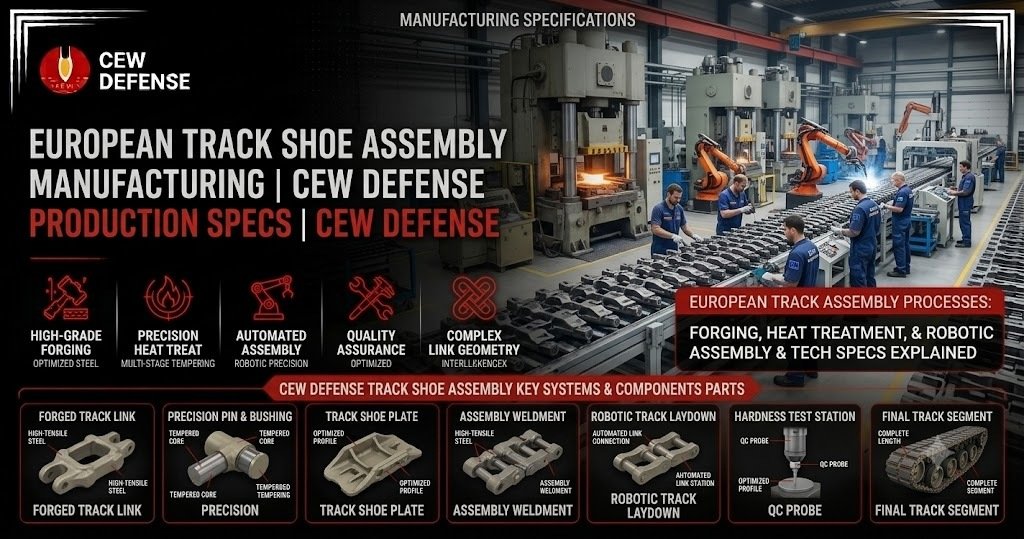
Heavy machinery relies on durable tracks to move across rough terrain and soft soil conditions. Track Shoe Assembly Manufacturing creates the critical undercarriage components that support massive vehicle weights safely. Modern facilities follow ISO 9001:2015 standards to maintain strict quality control during every production step. The production floor is also TÜV Austria-certified to ensure compliance with international industrial safety rules. Engineers designed these systems to distribute heavy loads evenly across the ground surface area.
This wide footprint prevents heavy vehicles from sinking into wet mud or loose sand. Operators depend on reliable track systems to complete demanding construction and military missions efficiently. A complete track system consists of multiple interconnected steel parts that form a continuous loop. The main loop wraps around drive sprockets and idler wheels to transfer engine power. Proper tension keeps the track tight and prevents sudden derailments during aggressive vehicle maneuvers.
Core Components of Track Systems
Track shoes provide the direct contact point between the heavy vehicle and the ground. Manufacturers cast these heavy steel plates with raised grousers to maximize traction on slippery surfaces. Different grouser profiles suit specific environments like solid rock, wet clay, or packed snow. Track links connect individual shoes together and form the structural backbone of the entire assembly. These thick metal bars endure extreme bending forces when the vehicle crosses large obstacles.
Steel pins and hardened bushings allow adjacent track links to pivot freely during movement. These rotating joints absorb massive shock loads when the vehicle travels over uneven ground. Grease fittings lubricate the internal surfaces to reduce friction and extend component service life. Sealed joints prevent abrasive dirt from entering the pin cavity and causing premature wear. Rubber pads bolt onto steel shoes to protect paved roads from severe surface damage.
Materials Used in Production
Track Shoe Assembly Manufacturing requires specific metal alloys that resist severe abrasion and impact damage. High carbon steel provides the necessary core toughness to prevent catastrophic cracking under heavy loads. This material grade absorbs sudden shock impacts without shattering when the vehicle hits solid rocks. Boron steel alloys offer superior hardenability during the thermal processing stages of component production. The addition of boron allows deeper hardness penetration through thick cross-sections of cast metal.
Wear-resistant castings protect the track shoes from rapid degradation in highly abrasive environments. Hard carbide particles embedded in the matrix stop sharp stones from gouging the metal surface. Foundries carefully control the chemical composition of molten metal to guarantee consistent mechanical properties. Strict metallurgical testing ensures that every batch of raw material meets demanding engineering specifications. Material traceability systems track each steel heat from the supplier to the final machined product.
The Manufacturing Process
Track Shoe Assembly Manufacturing involves several sequential steps to transform raw metal into finished parts. Foundries create precise wooden patterns to form the sand molds used for casting liquid metal. Molten steel pours into these molds and solidifies into the rough shape of track shoes. Workers place the raw castings into large industrial furnaces to alter their internal crystalline structure. Quenching the hot metal in oil rapidly cools the surface and increases overall material hardness.
CNC machines bore precise holes into the track links to accept the connecting steel pins. Milling operations flatten the mating surfaces to ensure perfect contact between adjacent track components. Read our detailed guide on machining for European defense to understand these processes better. Automated washing stations remove residual cutting fluids before the parts enter the final assembly phase. Robotic arms lift heavy components into position to protect human workers from dangerous manual lifting.
Quality Control Operations
Track Shoe Assembly Manufacturing demands rigorous quality control to guarantee reliability in demanding field conditions. Inspectors use coordinate measuring machines to verify the exact distance between pinholes on links. Any deviation from the engineering drawings will cause assembly issues on the final production line. Technicians apply portable hardness testers to confirm the metal achieved the correct Rockwell hardness scale. Soft areas indicate improper heat treatment and require the batch to undergo thermal processing again.
Engineers subject sample assemblies to extreme hydraulic pressure to simulate maximum operational vehicle weight limits. The track components must endure these static loads without showing visible signs of plastic deformation. Fatigue testing machines cycle the joints millions of times to predict long-term field durability. Ultrasonic testing reveals hidden internal voids that could compromise the structural strength of heavy castings. Magnetic particle inspection detects microscopic surface cracks that develop during aggressive grinding and finishing operations.
Component Specifications
The following table summarizes the hardness requirements and primary applications for common track materials. High carbon steel typically achieves moderate hardness levels suitable for heavy structural track links. Boron steel alloys reach higher hardness values to resist extreme wear on track shoe surfaces. Induction-hardened pins and bushings require the highest hardness to survive constant rotational friction forces. Engineers select specific material grades based on the expected operating environment and vehicle weight class.
Proper material selection significantly extends the operational lifespan of the entire undercarriage track system. Replacing worn components with incorrect material grades will cause rapid premature failures in the field. Maintenance manuals always specify the exact original equipment manufacturer part numbers for replacement track components. Using certified replacement parts ensures that the track system maintains its original load-carrying capacity. Quality manufacturers provide comprehensive metallurgical certificates for every batch of heavy undercarriage components they produce.
Heavy Equipment Applications
Military tanks utilize heavy track systems to traverse muddy battlefields and steep earthen trenches. The wide tracks distribute the massive armor weight to prevent the tank from getting stuck. Bulldozers rely on robust track shoes to push heavy loads of dirt across construction sites. Excavators use specialized track pads to maintain stability while digging deep foundations in loose soil. Farmers equip large tractors with rubber-coated track shoes to minimize soil compaction in fields.
Reduced ground pressure protects the root systems of crops and improves overall agricultural harvest yields. Forestry mulchers use aggressive steel grousers to climb steep hills covered with slippery, wet leaves. These specialized applications require custom track configurations designed specifically for unique environmental operating conditions. You can view our complete Track Shoe Assembly catalog to explore current production capabilities. Selecting the correct grouser profile significantly improves machine productivity and reduces daily fuel consumption.
Common Failures and Maintenance
Continuous friction against the drive sprocket gradually wears away the internal surfaces of track links. Excessive wear increases track pitch and causes the chain to jump teeth during acceleration. Heavy shock loads eventually cause microscopic cracks to form inside the hardened steel track pins. Operators must replace broken pins immediately to prevent the entire track chain from snapping apart. Sharp rocks slowly grind down the tall grousers until the track shoes lose traction completely.
Worn grousers create dangerous slipping hazards when heavy vehicles attempt to climb steep muddy inclines. Regular visual inspections help maintenance crews identify these common wear patterns before catastrophic failures occur. Greasing the pivot joints daily remains the most effective way to extend track service life. Technicians measure track sag regularly to ensure the tensioning cylinders maintain correct operational specifications. Proper cleaning of the undercarriage prevents abrasive mud from accelerating the wear rate of bushings.
Supply Chain and Logistics
Track Shoe Assembly Manufacturing requires a stable supply chain to deliver heavy components to clients. Foundries must secure consistent sources of high-quality scrap metal to maintain stable chemical compositions. Logistics teams coordinate specialized flatbed trucks to transport massive pallets of finished track shoes safely. Proper packaging prevents the heavy steel parts from damaging each other during long transit routes. Global shipping networks ensure that replacement parts reach remote construction sites and military bases quickly.
Warehouses maintain strategic inventory buffers to fulfill urgent emergency orders for critical undercarriage replacement components. Reliable logistics prevent expensive project delays caused by unexpected equipment downtime in the field. Dedicated account managers track every shipment from the factory floor until the final customer delivery. This end-to-end visibility gives equipment owners complete confidence in their spare parts supply. Strategic partnerships with global freight forwarders ensure timely international deliveries despite complex customs regulations.
Environmental Considerations
Track Shoe Assembly Manufacturing facilities implement strict environmental controls to minimize their industrial carbon footprint. Modern foundries capture airborne dust and recycle it back into the molding sand preparation process. Advanced filtration systems clean the cooling water before releasing it back into local municipal systems. Heat treatment furnaces utilize waste heat recovery systems to preheat incoming combustion air and save energy. Recycling worn track shoes at the end of their life cycle provides valuable raw steel scrap.
Electric arc furnaces melt this recycled scrap using renewable electricity to produce new track components. These sustainable practices help heavy equipment manufacturers meet strict environmental regulations imposed by local governments. Reducing industrial waste lowers overall production costs while protecting the surrounding environment from toxic contamination. Green manufacturing initiatives ensure the long-term viability of the heavy equipment undercarriage supply chain. Environmental auditors regularly inspect the production facilities to verify compliance with international sustainability standards.
Future Industry Trends
Track Shoe Assembly Manufacturing continues to evolve as engineers develop stronger alloys and better processes. Robotic arms now handle hot castings to protect human workers from dangerous industrial furnace environments. Automated welding cells apply hardfacing layers to track shoes with perfect consistency and minimal waste. Researchers are testing ceramic matrix composites to create lighter track shoes with superior abrasion resistance. Lighter tracks reduce the overall vehicle weight and improve fuel efficiency during long-distance transport.
Digital sensors embedded inside track links will soon transmit real-time wear data to operators. This smart technology will alert maintenance teams exactly when specific components require scheduled replacement services. Additive manufacturing techniques might eventually produce complex track link geometries that are impossible to cast traditionally. Advanced computer simulations predict stress concentrations and optimize the structural geometry of cast metal parts. Continuous improvement programs drive ongoing enhancements in product durability and overall manufacturing process efficiency.
Conclusion
Track Shoe Assembly Manufacturing remains a vital industrial process supporting global construction and defense sectors. Durable steel components help heavy machinery maintain reliable movement and performance in demanding environments. Regular maintenance and high-quality replacement parts are essential for extending undercarriage lifespan and reducing operational issues. We specialize in producing heavy-duty undercarriage components and custom track shoes designed for specific vehicle requirements. The company continues to invest in modern manufacturing technologies to serve heavy equipment operators worldwide. Please visit CEW Defense to explore its complete range of industrial manufacturing services and capabilities.