
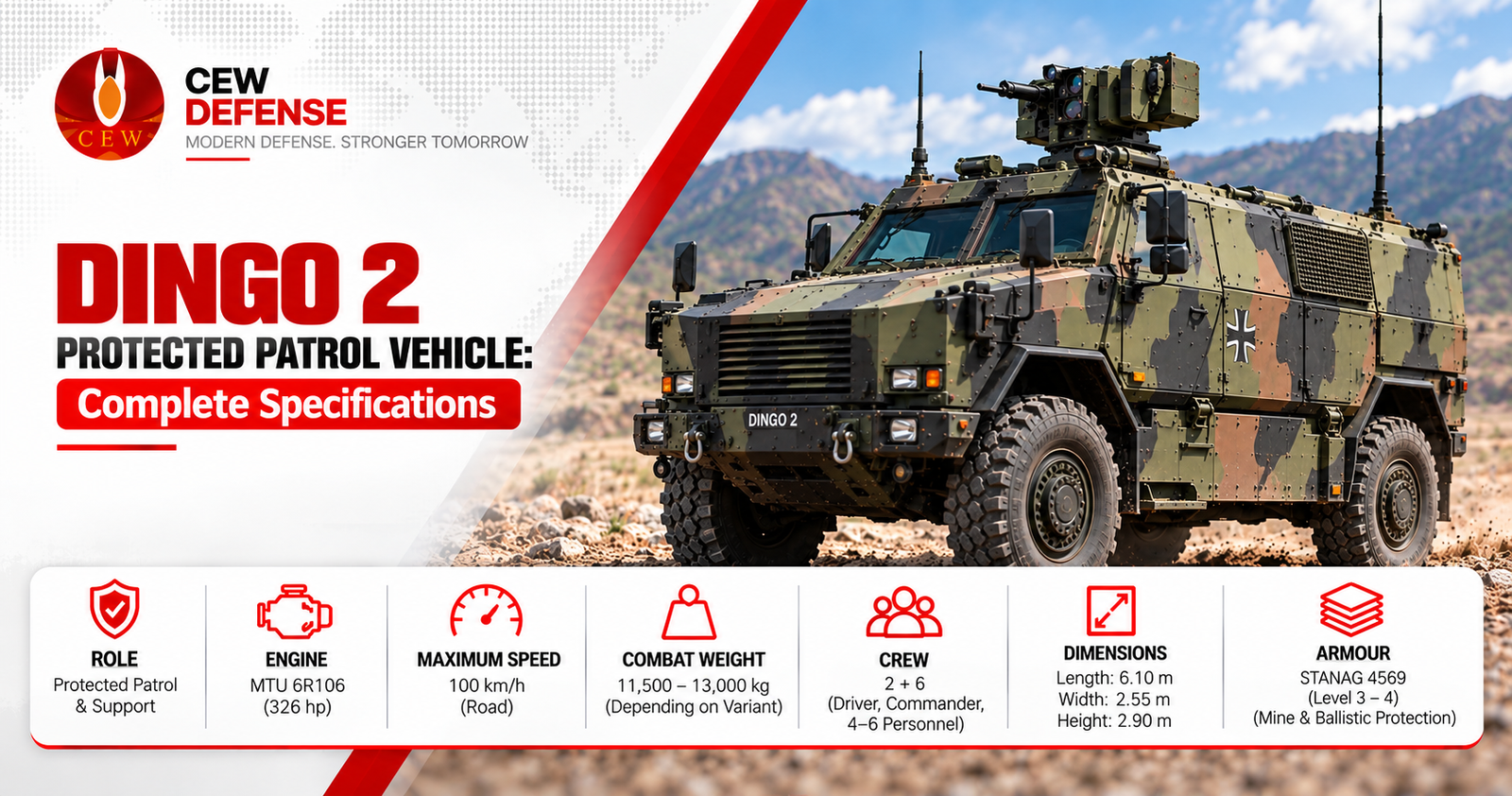
The Dingo 2 stands as a remarkable protected patrol vehicle for modern military forces. This German-engineered machine delivers exceptional mobility across difficult and muddy terrain on a daily basis. Military commanders highly value its robust design paired with heavy tactical survivability on battlefields. Engineers originally designed this versatile platform specifically for complex operations and rapid deployment missions.
A heavyweight chassis allows for strategic transport using standard military cargo aircraft quite easily. Continuous evolution of this armored system ensures modern battlefield operational relevance at all times. Nations across Europe recognize its proven effectiveness in diverse combat environments on a daily basis. This unique capability provides commanders with unprecedented flexibility during complex tactical missions worldwide.
Core Engineering and Chassis Architecture
Understanding the precise dimensions reveals why this vehicle excels in tactical scenarios. Designers prioritized a V-shaped hull to minimize blast detection by enemy observation posts. The Dingo 2 weighs approximately 8.8 tons in its standard base configuration.
Its compact length measures merely 5.5 meters from the front bumper to the back. People often group these with other German tanks due to their shared engineering roots.
-
The armor thickness provides essential protection against small arms fire and dangerous explosive shrapnel.
-
Its narrow profile enables transport inside standard military cargo helicopters quite easily and safely.
-
The independent suspension guarantees exceptional stability during high-speed tactical maneuvers on rough ground.
-
Weight distribution remains perfectly balanced to prevent tipping on steep inclines and muddy hills.
- Engine and Power
A powerful diesel engine generates reliable horsepower to reach impressive speeds during complex tactical missions. This robust powertrain allows the vehicle to reach speeds near 55 miles per hour easily. Operators of the Dingo 2 appreciate the impressive operational range of nearly six hundred miles.
- Visibility and Controls
The driver sits in the front left position with excellent forward visibility, constantly and safely. A large rear hatch allows for quick crew entry and emergency exits quite safely always. Digital displays provide real-time diagnostic data to the operator without any distracting delays or errors.
- Chassis Durability
The heavy steel hull withstands extreme temperature fluctuations without warping or structural fatigue very easily. Engineers tested the heavy frame against severe vibration stresses during prolonged off-road trials very thoroughly. Corrosion-resistant coatings protect the external metal surfaces from harsh environmental damage quite effectively and reliably.
Tactical Weapon Systems and Firepower
Military planners developed multiple specialized variants to satisfy diverse combat requirements across units. The base model primarily serves as a protected patrol platform equipped with remote weapons. Another version functions as a dedicated command post system carrying advanced communication arrays.
The Dingo 2 later evolved into larger configurations for significantly enhanced cargo capacity. This evolutionary step provided necessary internal space for advanced electronic warfare suites.
-
The remote weapon station specializes in engaging enemy targets from a protected distance.
-
The command model protects forward units by coordinating logistics constantly and very reliably.
-
The ambulance version delivers rapid medical support to advancing infantry troops quite quickly.
-
Secondary machine guns provide essential suppression against nearby dismounted enemy infantry threats constantly.
- Gunner Station and Optics
The gunner operates the primary weapon station from a protected internal position safely. Ammunition feeds are carefully designed to prevent jamming during rapid firing sequences. The commander has an independent thermal sight for target acquisition and tracking constantly.
Smoke grenade launchers provide immediate concealment when the vehicle comes under heavy fire. Laser rangefinders calculate exact distances to improve first-shot hit probability quite significantly.
- Modular Turret Configurations
The modular turret design allows for rapid weapon swaps in the combat field. Technicians can easily replace damaged optics or weapon mounts within minutes under pressure. This flexibility ensures the platform adapts to changing mission parameters without any delay.
Future upgrades to the Dingo 2 will likely integrate advanced digital targeting computers. Standardized interfaces simplify the installation of new sensor packages across all vehicle variants.
- Ammunition Storage Safety
Ammunition storage follows strict safety protocols to prevent catastrophic internal explosions completely. Blast panels direct explosive force away from the occupied crew compartment very safely. Crews receive extensive training on proper handling and loading of explosive ordnance daily.
Secure locking mechanisms prevent accidental discharge during rough terrain navigation quite consistently. Fire-resistant containers isolate volatile munitions from the main electrical systems quite effectively.
Strategic Deployment and Airborne Logistics
Modern reconnaissance demands versatile platforms capable of executing complex battlefield assignments without delays. Forces often pair the Wiesel AWC with other light armored vehicles for coverage. Units frequently deploy the Fennek alongside it to maximize surveillance capabilities in the field.
This strategic combination ensures superior situational awareness across vast operational theaters during missions. Joint exercises validate the interoperability of these combined arms formations quite regularly.
-
The C-130 Hercules can transport several units internally without requiring any structural modifications.
-
CH-53 helicopters can externally sling-load the vehicle for precise insertion missions quite safely.
-
Rapid loading procedures minimize exposure time in hostile drop zones completely and safely.
-
Parachute deployment systems ensure safe delivery of the vehicle from high altitudes reliably.
- Airlift Compatibility Standards
Transport aircraft can carry multiple units simultaneously for mass airborne assaults quite easily. Helicopter sling-load operations further enhance the rapid deployment potential of this entire system. Such logistical advantages make it indispensable for modern expeditionary warfare doctrines without question.
Ground transport via heavy trucks allows for rapid relocation between distant military bases. Specialized tie-down points secure the heavy chassis firmly during turbulent air transport flights.
- Amphibious and Terrain Capabilities
The vehicle can easily ford shallow water obstacles without any special preparation required. The heavy tires feature run-flat inserts to protect against punctures on paved roads. Navigation systems integrate with digital maps to guide the crew through hostile territory.
Drivers can navigate tight forest trails that would easily trap heavier armored vehicles. The low ground pressure prevents the vehicle from sinking in deep mud or snow.
- Rapid Reaction Force Integration
Rapid deployment protocols are drilled into crews until they become second nature. Parachute systems are rigorously inspected before every single airborne training exercise quite constantly. The vehicle lands softly and is ready to fight within minutes of touchdown.
This immediate readiness is what makes airborne commanders trust this platform quite implicitly. Quick reaction teams utilize this mobility to respond to emerging threats quite instantly.
Advanced Armor and Crew Survivability
Historical records demonstrate the exceptional reliability of the Dingo 2 in actual action. German forces deployed these units extensively during international peacekeeping missions in the Balkans. The agile chassis navigated narrow urban streets and dense forest environments with remarkable ease.
Operators reported minimal mechanical failures even under harsh environmental stress conditions quite daily. This proven track record solidifies its reputation among allied defense forces worldwide.
-
Peacekeeping forces valued its non-threatening appearance combined with lethal defensive capabilities quite always.
-
Urban combat scenarios highlighted its superior maneuverability compared to heavier main battle tanks.
-
Logistics teams appreciated the simplified maintenance procedures requiring fewer specialized tools overall.
-
Cold weather operations proved the engine reliability in freezing temperate climates quite consistently.
- Ballistic Protection Levels
The vehicle demonstrated exceptional survivability during prolonged urban combat engagements quite consistently. Crews reported that the heavy suspension absorbed shock from improvised explosive devices well. The compact size allowed it to hide behind standard civilian structures quite easily.
Enemy forces often underestimated the heavy firepower packed into such a small frame. Spall liners protect occupants from fragmentation if the outer armor is ever penetrated.
- NBC Protection Systems
Sealed hatches protect occupants from nuclear, biological, and chemical contaminants quite reliably. Internal air filtration systems scrub harmful particles from the cabin atmosphere quite continuously. Crew members wear specialized masks during extreme contamination events for added safety always.
Regular maintenance checks ensure all rubber seals remain intact and fully functional always. Overpressure systems prevent toxic gases from entering the cabin through minor gaps constantly.
- Ergonomic Crew Comfort
Acoustic dampening materials reduce internal noise levels for better crew communication quite constantly. Adjustable seating accommodates soldiers of varying heights during extended patrol durations quite comfortably.
Climate control units maintain acceptable temperatures even when operating in extreme heat constantly. Intuitive control layouts minimize operator fatigue during long and stressful combat patrols significantly. Adequate storage space allows personnel to keep essential gear within easy reach always.
Precision Manufacturing and Undercarriage Solutions
Superior mobility depends entirely on high-quality undercarriage components and durable track assemblies. We are currently manufacturing precision-engineered tank undercarriage parts that meet strict military specifications. Our team is designing track
shoe assemblies to prioritize maximum traction and extended operational lifespans. Rigorous quality control processes guarantee every component withstands extreme battlefield stresses without failing. Our dedicated manufacturing facilities operate continuously to support heavy defense readiness quite constantly always.
-
We are utilizing advanced metallurgy to forge high-strength steel track links for maximum durability.
-
Our custom rubber pads reduce ground pressure and minimize environmental impact significantly during operations.
-
Fast turnaround times ensure military units receive critical replacements without any operational delay.
-
Every track shoe undergoes strict stress testing before final shipment to valued clients.
- Metallurgical Excellence in Track Links
The manufacturing process involves precise casting and machining to ensure perfect mechanical tolerances. Technicians inspect every single weld using ultrasonic testing to prevent hidden flaws. Our facilities adhere to stringent international quality standards for all military procurement processes.
International clients are benefiting greatly from our decades of experience in armored vehicle undercarriage systems. High-tensile steel alloys provide the necessary strength to withstand continuous abrasive wear constantly.
Custom Track Shoe Assembly Design
Custom fabrication services allow us to meet unique client requirements precisely and efficiently. Our dedicated support team assists clients with technical inquiries and part selection constantly. We continuously invest in research and development to pioneer next-generation track technologies.
This commitment to excellence makes us a trusted partner for defense needs worldwide. Interchangeable track pads allow operators to switch between rubber and steel configurations easily.
- Quality Assurance and Testing
Every component undergoes rigorous dimensional checks before entering the final assembly phase. Load-bearing tests simulate extreme combat conditions to verify structural integrity completely. We document all testing phases to provide full transparency to our military clients.
Our production lines operate continuously to meet urgent defense procurement deadlines quite reliably. Third-party auditors regularly review our facilities to ensure compliance with all regulations constantly.
Final Thought
The Dingo 2 represents a true masterpiece of German engineering and tactical combat innovation. Military forces will continue relying on this versatile platform for specialized missions across the world. Continuous technological upgrades promise even greater operational capabilities for the coming decades of active combat.
The legacy of this iconic vehicle will undoubtedly influence future light armored vehicle designs. Future iterations will likely incorporate advanced autonomous features and enhanced crew survivability measures safely.