
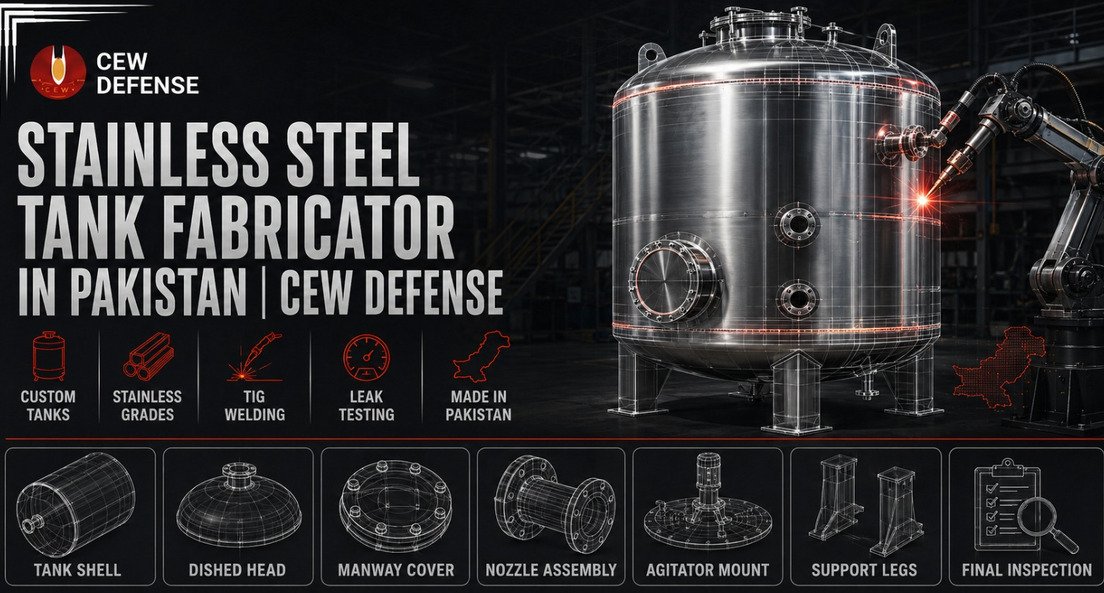
When your business depends on safe and reliable liquid storage, tank quality matters from the beginning. A trusted stainless steel tank fabricator can design and manufacture tanks for water, chemicals, food products, pharmaceuticals, oils, and other industrial materials. From selecting the right steel grade to completing welding, testing, finishing, and delivery, the right partner helps you achieve dependable performance and fewer future problems.
Reliable Stainless Steel Tank Manufacturing for Industrial Use
Every industry has different storage and processing requirements. Tank capacity, product type, temperature, pressure, available space, and installation conditions all influence the final design.
Stainless steel tanks are widely used because they offer a strong combination of durability, cleanliness, and corrosion resistance. Food processors, pharmaceutical manufacturers, chemical companies, beverage producers, cosmetic brands, farms, and water treatment facilities all use them.
Before starting production, a good manufacturer should understand how you plan to use the tank. This helps prevent unsuitable designs, unnecessary features, and unexpected costs later.
Why Stainless Steel Tanks Are a Practical Investment
Stainless steel handles moisture, regular cleaning, and many industrial environments without losing its strength quickly. With proper care, a well-built tank can continue performing reliably for many years.
The material also resists rust and does not easily absorb odors, flavors, or contaminants. This makes stainless steel especially useful for food, beverage, pharmaceutical, and hygienic processing applications. A properly designed tank can make daily operations easier. Smooth surfaces simplify cleaning, suitable fittings improve product flow, and accessible components make inspection and maintenance more convenient.
The best steel grade depends on the stored product and working environment. A knowledgeable manufacturer can help you choose an option that balances performance, safety, and cost.
Common Stainless Steel Tank Types
A capable manufacturer can produce different tank styles according to your production needs. Some tanks are designed for storage, while others support mixing, heating, cooling, or controlled processing.
Tank shape, wall thickness, supports, and fittings should match the actual operating conditions. Good planning improves safety and avoids expensive changes after manufacturing.
Materials and Finishes for Better Performance
Stainless steel 304 and 316 are common choices for industrial tank manufacturing. However, the correct option depends on chemical exposure, sanitation requirements, temperature, and the characteristics of your product.
Grade 304 works well for general applications involving water, food products, beverages, and mild chemicals. Grade 316 offers better resistance to chlorides, salts, and more aggressive chemical environments.
The internal surface finish also affects cleaning and hygiene. Smooth, polished surfaces reduce residue buildup and allow operators to complete sanitation more efficiently.
Manufacturers may offer brushed, polished, or sanitary finishes. Your selected finish should reflect the product, cleaning method, and regulatory requirements involved.
Custom Tank Design for Specific Requirements
Standard tanks are not suitable for every facility. Limited floor space, unusual pipe connections, production changes, or specific safety requirements may require a customized design. You can request particular capacities, dimensions, outlets, access points, support structures, ladders, platforms, level indicators, or inspection openings. These details make the tank easier to install and use.
Some applications also require internal coils, agitators, insulation, heating jackets, cooling jackets, or specialized valves. These additions can improve temperature control, product consistency, and overall process efficiency.
Good coordination between the tank design and your existing equipment can prevent installation delays. For related industrial fabrication needs, explore custom metal manufacturing services.
Important Details to Discuss Before Ordering
Sharing accurate project information helps the manufacturer prepare a suitable design and quotation. Even small details can affect tank performance, cost, and delivery time.
Before requesting a quotation, prepare the following information:
-
Required tank capacity and working volume
-
Type of product stored inside the tank
-
Chemical properties of the product
-
Operating and cleaning temperatures
-
Required pressure or vacuum conditions
-
Preferred stainless steel grade
-
Desired internal and external finish
-
Tank shape, orientation, and installation position
-
Inlet, outlet, drain, and overflow connections
-
Mixing, heating, cooling, or insulation requirements
-
Available floor space and support details
-
Required testing, inspection, and documentation
Clear specifications make fabrication drawings more accurate. They also help both sides discuss pricing, scheduling, installation, and future maintenance properly.
Quality Control During Tank Fabrication
Quality control should take place throughout manufacturing, not only during the final inspection. Each stage, including cutting, forming, welding, polishing, and testing, affects the finished tank. Weld quality deserves particular attention. Poor welding can create weak points, leaks, contamination risks, and premature damage. Experienced technicians use suitable welding procedures and carefully treat welded areas afterward.
Depending on the application, manufacturers may perform dimensional checks, visual inspections, leak testing, pressure testing, or other technical evaluations. These checks help confirm that the tank meets the agreed specifications.
Useful project documents may include material certificates, fabrication drawings, inspection records, welding information, and testing results. Proper documentation supports quality assurance and makes future servicing easier.
Benefits of Choosing a Local Manufacturer
Working with a local stainless steel tank fabricator can make communication and project coordination much simpler. You can discuss requirements directly, receive updates more quickly, and resolve design questions without unnecessary delays. Local manufacturing may also reduce transportation difficulties and delivery expenses. In some cases, the supplier can arrange site visits to confirm measurements and understand installation conditions.
If changes become necessary during production, direct communication allows decisions to happen faster. This can reduce confusion and help keep the project moving.
Location should not be your only consideration, however. Always review the manufacturer’s experience, equipment, quality systems, previous work, and after-sales support.
How to Select the Right Fabrication Partner
Choosing the lowest quotation may seem attractive, but price alone does not show the complete value of a tank. A reliable supplier should understand your application and explain the proposed solution clearly.
Consider these points before placing an order:
-
Review experience with similar industrial projects
-
Confirm suitable steel grades for your application
-
Ask about welding procedures and inspection methods
-
Check available fabrication and finishing capabilities
-
Request detailed drawings before production begins
-
Confirm delivery, installation, and warranty responsibilities
-
Discuss maintenance access and replacement requirements
-
Compare quotations using identical specifications
A professional quotation should clearly mention materials, dimensions, accessories, testing, delivery, and installation. This protects your budget and reduces the chance of hidden charges.
Cost Factors for Stainless Steel Tanks
Several factors influence the final tank price. These include capacity, steel grade, wall thickness, design complexity, fittings, surface finish, testing, transportation, and installation.
Grade 316 generally costs more than grade 304 because it provides stronger resistance against salts, chlorides, and harsh chemicals. Additional equipment, such as agitators, jackets, insulation, platforms, and instruments, also increases the investment.
A lower initial price may not offer good value if the tank needs frequent repairs or replacement. It is better to consider service life, maintenance needs, safety, and suitability for your process.
Requesting a detailed quotation allows you to understand exactly what you are purchasing. It also makes it easier to compare different suppliers fairly.
Applications Across Different Industries
Stainless steel tanks support many commercial and industrial operations. Their cleanable surfaces, strong construction, and corrosion resistance make them useful for different production environments. Food manufacturers use tanks for milk, sauces, edible oils, syrups, beverages, and liquid ingredients. Pharmaceutical companies need carefully finished tanks for clean and contamination-sensitive processes.
Chemical facilities use stainless steel tanks for selected chemicals, additives, solvents, and treatment materials. Cosmetic manufacturers use them for creams, shampoos, lotions, and other liquid formulations. Water treatment plants may require tanks for storage, dosing, filtration, and process operations. In every case, the design must match the product and operating conditions.
Professional Support from CEW Defense
CEW Defense provides industrial fabrication solutions for businesses requiring durable and accurately manufactured equipment. Its services can support projects involving customized tanks and related metal fabrication requirements.
The team can help you discuss material selection, tank capacity, fittings, finishing, testing, and installation requirements. This makes the purchasing process easier and helps prevent avoidable design problems. A detailed consultation should take place before fabrication begins. Once the manufacturer understands your application, it can recommend a more practical solution for your facility.
Final Thought
The right stainless steel tank fabricator can improve hygiene, production reliability, safety, and long-term operating value. Choose a certified partner that understands your requirements, communicates clearly, and provides complete technical documentation. For dependable fabrication support and customized industrial storage solutions, contact us at CEW Defense today.