
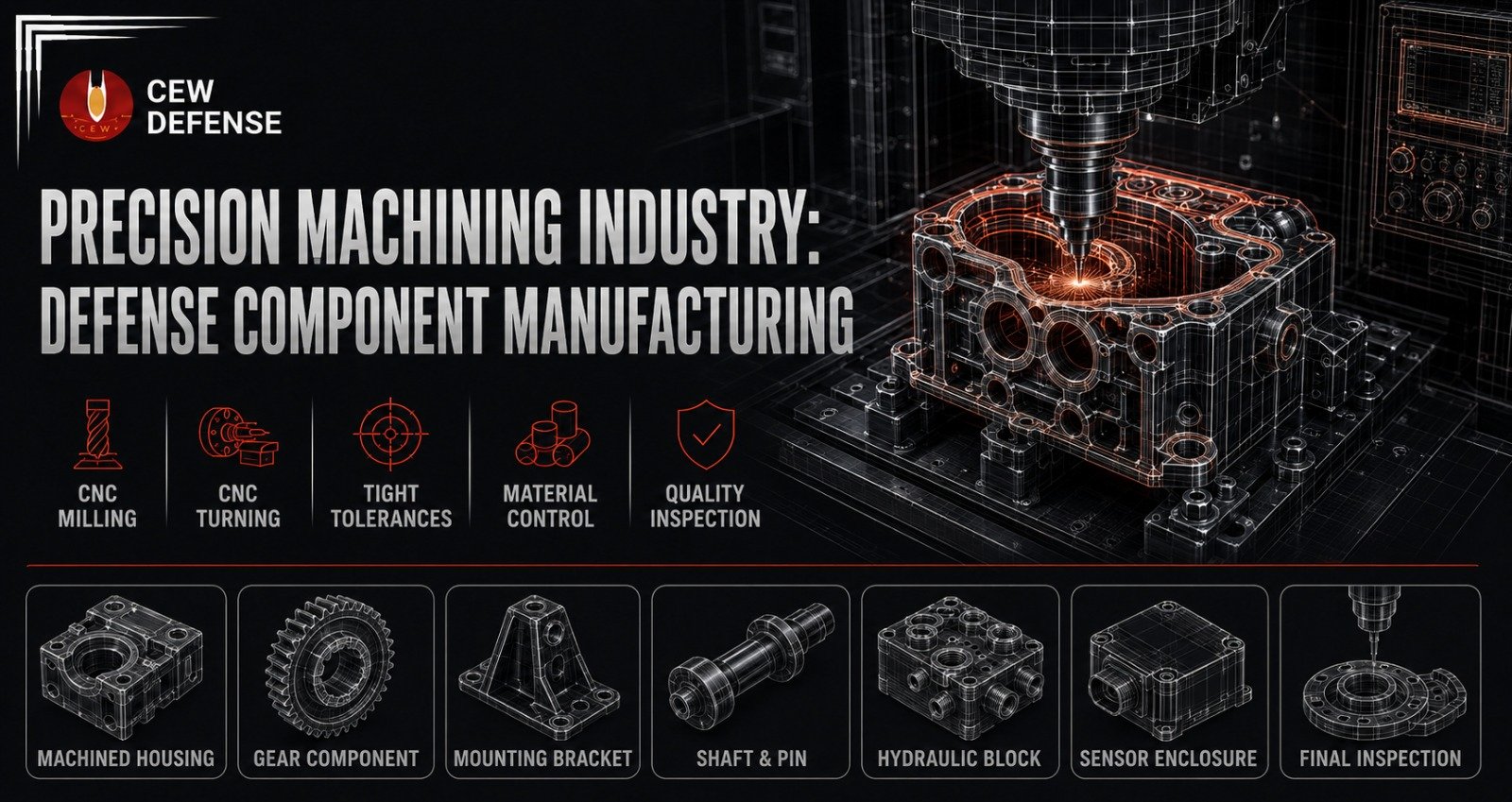
Modern defense manufacturers require systems that deliver strength, precision, corrosion resistance, and dependable performance. CEW Defense provides stainless steel CNC machining services for demanding military applications worldwide. Its quality system follows TÜV Austria certification and ISO 9001:2015 certification requirements, supporting consistent manufacturing and documented quality control.
Military equipment operates in harsh environments where failure can create serious operational risks. Stainless steel offers excellent durability, temperature resistance, and protection against moisture, chemicals, and corrosion. However, achieving reliable performance requires advanced machining methods, experienced engineers, and strict inspection procedures.
Why Stainless Steel Suits Defense Applications
Stainless steel is widely selected for defense components because it combines mechanical strength with long-term environmental resistance. Different grades support various performance requirements, including high hardness, improved corrosion protection, and elevated temperature stability.
Defense manufacturers often use stainless steel for housings, brackets, fasteners, shafts, connectors, mounts, and structural assemblies. These parts may operate outdoors, underwater, inside vehicles, or near aggressive chemicals.
The correct stainless steel grade depends on the design, application, and expected operating conditions. Engineers usually consider tensile strength, hardness, corrosion exposure, dimensional stability, and compatibility with nearby materials.
Commonly machined stainless steel grades include:
Precision Manufacturing for the Military System
Military parts must meet tight specifications because even small dimensional errors can affect complete assemblies. Professional stainless steel CNC machining services help manufacturers achieve repeatable results across prototypes, replacement parts, and batches.
Computer numerical control equipment follows programmed toolpaths with exceptional consistency. This process reduces manual variation and supports accuracy for complex geometries, holes, threads, grooves, and contoured surfaces.
Advanced machining also helps manufacturers control critical tolerances during demanding schedules. Engineers can review digital models, identify manufacturing challenges, and optimize machining strategies before production begins.
This approach provides better accuracy, faster processing, and reduced material waste. It also allows manufacturers to maintain consistent results when producing multiple components with identical specifications.
Defense Applications That Require Stainless Steel Machining
Stainless steel supports several military and defense systems. Their durability makes them suitable for assemblies requiring dependable performance under harsh operating conditions.
Typical applications include:
-
Armored vehicles require reliable strength and corrosion protection.
-
Naval hardware is exposed to saltwater, humidity, and marine contaminants.
-
Weapon systems require accurate dimensions and secure assembly.
-
Communication equipment housings protect sensitive electronics from environmental damage.
-
Aircraft and aerospace parts require lightweight designs with strong material performance.
-
Optical equipment mounts demanding stability, precise alignment, and vibration resistance.
-
Field equipment hardware designed for repeated transportation, installation, and deployment.
-
Specialized brackets and fixtures support mission-critical equipment during operation.
Each application involves different materials and requirements. A capable machining partner evaluates the design carefully before recommending material grades, tolerances, finishing methods, and inspection standards.
Benefits of Working With a Qualified Machining Partner
Choosing the right manufacturing partner can significantly influence product quality, delivery schedules, and total project costs. Experienced stainless steel CNC machining service providers understand defense-related expectations and complex requirements.
A qualified supplier should offer:
-
Experienced engineering support for manufacturability and design improvements.
-
Modern CNC equipment supports complex and highly accurate components.
-
Material traceability confirming the correct stainless steel grade and batch.
-
Strict inspection procedures verify dimensions, finishes, and functional requirements.
-
Flexible capabilities supporting prototypes, low volumes, and larger orders.
-
Clear communication throughout the quoting, inspection, and delivery stages.
-
Reliable documentation helps customers maintain quality and compliance records.
These capabilities reduce uncertainty and help defense manufacturers avoid costly rework. They also support smoother procurement processes for contractors, engineers, and equipment integrators.
Engineering Support From Design to Delivery
Successful machining begins with a clear understanding of the intended function. Engineers should review the part drawing, material grade, tolerance requirements, surface finish, and expected operating environment.
Manufacturing specialists can identify unnecessary complexity and suggest practical design improvements. These recommendations may reduce machining time, simplify tooling, improve strength, or lower overall costs.
For companies working within the precision machining industry, early collaboration creates valuable advantages. It helps teams resolve design issues before production begins and supports more predictable project outcomes.
A complete manufacturing workflow may include CAD review, material selection, CNC programming, machining, deburring, surface finishing, inspection, and packaging. Every stage should support the quality objectives.
Quality Control for Defense Manufacturing
Quality control remains one of the most important factors when producing military components. Manufacturers must confirm that every part meets the approved drawing, purchase order, and technical specifications.
Inspection methods may include coordinate measuring machine verification, caliper measurements, micrometer checks, thread inspection, visual examination, and surface roughness testing. The selected method depends on the geometry and tolerance requirements.
Material certificates can verify the stainless steel grade, heat number, chemical composition, and mechanical properties. Dimensional inspection reports provide additional confidence when components include critical features.
Strong quality procedures help identify deviations early and reduce the possibility of assembly problems. They also support traceability, repeatability, and customer confidence throughout the supply chain.
Surface Finishing and Corrosion Protection
Machining alone may not provide the final performance required for defense components. Surface finishing can improve appearance, corrosion resistance, wear performance, and compatibility with surrounding parts. Common finishing options include passivation, electropolishing, bead blasting, polishing, and controlled deburring. The ideal process depends on the stainless steel grade and the operating environment.
Passivation removes free iron and improves the naturally protective oxide layer on stainless steel. Electropolishing can create a smoother surface for components requiring enhanced cleanliness and reduced contamination risks. Manufacturers should select finishing processes according to functional needs rather than appearance alone. Proper finishing improves service life while supporting reliable performance during demanding applications.
Prototyping and Flexibility
Defense programs often begin with prototypes before moving into limited or full-scale production. A capable supplier should support each stage without compromising accuracy or communication. Prototype machining helps engineers test fit, function, assembly, and field performance. Design feedback from early parts can improve the final before larger production commitments are made.
For repeat orders, stainless steel CNC machining services provide consistent manufacturing across multiple batches. CNC programming, documented processes, and inspection plans help maintain stable results over time. This flexibility benefits defense contractors managing changing requirements, replacement part demands, and specialized equipment programs. It also helps reduce delays caused by unsuitable suppliers or repeated manufacturing adjustments.
Cost Factors for Stainless Steel Components
Several factors influence the final cost of machined stainless steel. Understanding these variables helps buyers request accurate quotations and make informed sourcing decisions.
Important cost factors include:
-
Material grade and availability can affect raw material pricing.
-
Part complexity may require advanced programming and multiple setups.
-
Tolerance requirements can increase machining and inspection time.
-
Surface finishing adds processing steps and related costs.
-
Order quantity influences setup costs and per-unit pricing.
-
Lead time requirements may affect scheduling and priorities.
-
Secondary operations can include drilling, threading, grinding, or marking.
The lowest quotation may not provide the best overall value. Buyers should evaluate quality systems, technical support, delivery reliability, documentation, and long-term performance.
Why Choose CEW Defense
CEW Defense supports customers seeking dependable manufacturing for demanding defense and industrial applications. The company focuses on precision, material quality, technical consistency, and responsive project support.
Its manufacturing approach can help customers produce durable stainless steel components for equipment, vehicles, marine systems, and specialized assemblies. Customers can discuss drawings, quantities, tolerances, materials, and delivery expectations before placing an order.
Clear communication is especially valuable when components involve complex specifications or strict delivery schedules. A responsive supplier can identify concerns early and recommend practical solutions.
How to Request a Machining Quote
Preparing complete information helps manufacturers provide faster and more accurate quotations. Customers should share the following details whenever possible:
-
Upload the latest technical drawing with dimensions and tolerances.
-
Specify the required stainless steel grade and material condition.
-
Mention the estimated quantity for prototypes or orders.
-
Describe surface finishing requirements and appearance expectations.
-
Confirm inspection documentation needed for project approval.
-
Provide the target delivery date and shipping destination.
-
Explain the application and critical performance requirements.
If a drawing is still under development, engineers can discuss the intended function and goals. Early communication often reveals opportunities for lower costs, improved manufacturability, and shorter lead times.
Final Thought
Reliable stainless steel CNC machining services help defense manufacturers achieve stronger components, consistent quality, and dependable field performance. Selecting an experienced supplier supports better results from initial design through final delivery. For accurate machining support and defense manufacturing, contact us at CEW Defense today.