
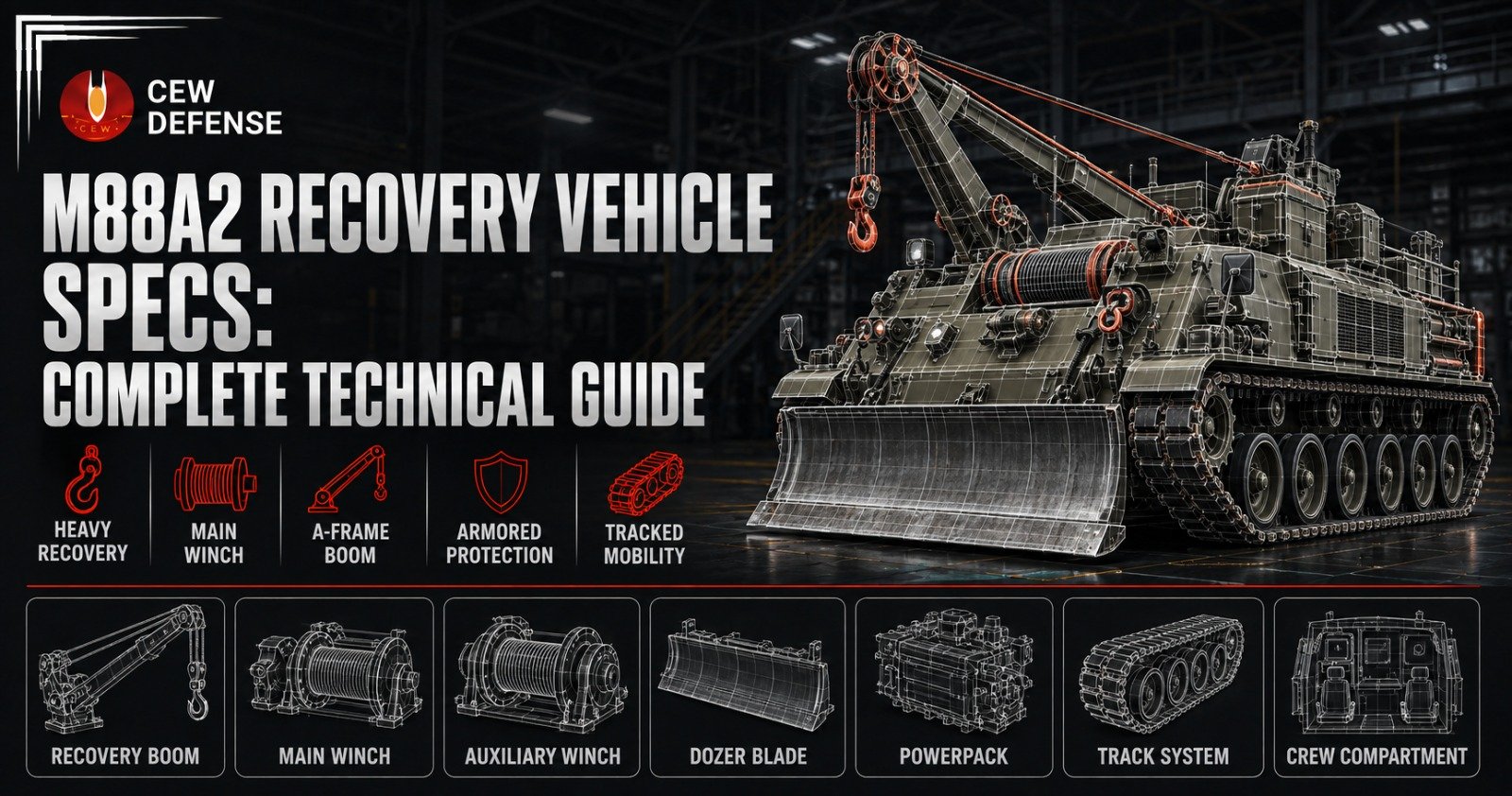
The M88A2 Hercules is the primary piece of equipment in modern military operations. It acts as the main recovery vehicle for heavy armored units worldwide. This tough machine handles essential battlefield recovery missions to keep combat forces running. Military crews rely on this heavy-duty vehicle for complex recovery operations involving disabled tanks.
Understanding the complete technical details helps operators appreciate the solid engineering behind this system. The M88A2 recovery vehicle specs reveal a machine built for extreme conditions and demanding daily tasks.
Core Technical Specifications
The M88A2 Hercules is a major step up from its older predecessors. It features enhanced capabilities that meet modern battlefield requirements perfectly. This heavy recovery vehicle received major upgrades to handle the increased weight of contemporary main battle tanks.
- Weight and Dimensions
The gross weight reaches 140,000 pounds, making it one of the heaviest recovery vehicles in active military service today. This substantial mass provides the necessary stability during heavy lifting operations.
-
Length: 27.13 feet (8.27 meters)
-
Width: 11.25 feet (3.43 meters)
-
Height: 10.25 feet (3.12 meters)
-
Ground Clearance: Designed for rough terrain navigation
-
Wheel Configuration: Tracked system for superior mobility
These compact dimensions allow the vehicle to maneuver effectively through confined spaces. The tracked undercarriage distributes weight evenly, preventing the vehicle from getting stuck.
- Power Plant and Performance
Mechanics rely on the Continental AVDS-1790-8CR engine to drive this heavy machine with raw mechanical strength. This V12 air-cooled twin-turbo diesel block generates a massive 1,050 horsepower output. Crews will use this ample power for the most demanding recovery tasks in the field.
-
Maximum Speed: It reaches 26-30 mph (42-48 km/h) on standard paved roads.
-
Cruising Range: The vehicle travels 300 miles (483 km) without needing extra fuel.
-
Fuel Capacity: It holds enough diesel for extended field operations in active combat zones.
-
Engine Type: The air-cooled design reduces daily maintenance complexity for busy ground crews.
-
Transmission: It uses a heavy-duty system designed for maximum torque multiplication during pulls.
This powerful engine previously towed disabled vehicles weighing up to 70 tons in combat. Such reliable performance proved absolutely essential during past operations in Iraq and Afghanistan.
Recovery and Equipment Capabilities
The M88A2 recovery vehicle specs showcase a strong set of specialized equipment. Each component serves a specific purpose in the battlefield recovery process. Crews use this gear for everything from initial stabilization to final towing operations.
- Winch Systems
The main winch represents the heart of recovery operations. It features a 70-ton constant pull capacity with 280 feet of cable. This massive pulling power enables the recovery of the heaviest armored vehicles currently in service.
-
Main Winch Capacity: 70 tons (63,504 kg) constant pull
-
Cable Length: 280 feet of high-strength steel cable
-
Auxiliary Winch: 3-ton capacity for cable handling
-
Winch Controls: Hydraulic operation from a protected crew position
-
Cable Storage: Organized system for rapid deployment
The auxiliary winch assists with cable management and lighter recovery tasks. This allows the crew to position equipment without exhausting the main winch system.
- Lifting and Stabilization Equipment
The A-Frame boom provides a 35-ton lifting capacity. This enables crews to remove and replace major components like tank engines in field conditions. This capability eliminates the need to transport disabled vehicles to rear-area facilities.
-
A-Frame Boom: 35-ton lifting capacity
-
Hydraulic Spade: Front-mounted dozer blade for stabilization
-
Outriggers: Extendable supports for heavy lifting operations
-
Lifting Attachments: Various hooks and slings for different applications
-
Control Systems: Precision hydraulic controls for delicate operations
The dozer blade serves dual purposes during recovery missions. It stabilizes the vehicle during heavy winching operations and clears obstacles.
Crew Configuration and Protection
Operating the M88A2 Hercules requires a trained crew of three members. Each member has specific responsibilities during complex recovery operations. They work together to execute missions safely and efficiently under pressure.
- Crew Roles and Responsibilities
Each crew member brings specialized skills to recovery operations. This ensures missions proceed smoothly under various challenging conditions.
-
Commander: Oversees operations, maintains communication, ensures safety protocols
-
Operator: Controls winch systems, boom operations, and vehicle movement
-
Mechanic: Performs field repairs, rigging operations, and technical assessments
This three-person crew proved optimal for recovery operations. It balances workload while maintaining operational effectiveness during long shifts.
- Armor and Defensive Systems
The M88A2 features steel hull construction with protection against small-arms fire. Modern variants received appliqué armor upgrades and ballistic skirts for enhanced survivability.
-
Steel Hull: Base protection against battlefield threats
-
Applique Armor: Additional plating for increased protection
-
Ballistic Skirts: Side protection for crew and critical components
-
Primary Armament: M2 .50-caliber heavy machine gun for self-defense
-
NBC Protection: Systems for nuclear, biological, and chemical environments
The armored cab protects the crew during hostile recovery operations. This allows missions to proceed even under direct enemy fire.
Detailed Specification Comparison
The M88A2 recovery vehicle specs are best understood through a clear, direct comparison. This table breaks down the exact numbers operators rely on daily.
This comprehensive specification table shows why the M88A2 remains the standard recovery vehicle. The M88A2 recovery vehicle specs continue to meet modern requirements despite the vehicle's age.
Operational History and Evolution
The M88A2 Hercules evolved from older recovery vehicles to meet changing needs. The original M88 entered service in the 1960s, but tank weights increased. The M88A2 variant emerged in the 1990s with enhanced capabilities.
- Evolution Milestones
-
Original M88: Entered service in the 1960s with limited capacity.
-
M88A1 Upgrade: Improved engine and transmission in the 1970s.
-
M88A2 HERCULES: Major upgrade program in the 1990s with increased power.
-
HERCULES II: Further enhancements for modern battlefield requirements.
The upgrade program addressed critical limitations of earlier variants. Engineers installed a more powerful engine, reinforced the hull, and upgraded recovery equipment.
- Modern Context and Linking
Modern operators continue using the M88A2 recovery vehicle specs as the baseline for operations. Some nations are pursuing replacement programs, but the vehicle remains highly relevant. For those interested in armored vehicle modernization programs, understanding recovery vehicle capabilities provides context for broader military equipment initiatives like the Stryker A1 modernization program and the M88A2 recovery vehicle specs that keep armored forces operational.
Maintenance and Support Requirements
To keep the M88A2 Hercules in working order, you need the right equipment and a team of trained mechanics. Since it's such a complex vehicle, regular maintenance is a must to keep it ready for duty.
- Maintenance Considerations
-
Engine Service: Regular intervals for the Continental diesel powerplant.
-
Hydraulic Systems: Frequent inspection of winch and boom hydraulics.
-
Track System: Ongoing maintenance of suspension and track components.
-
Cable Inspection: Regular examination of winch cables for wear and damage.
-
Armor Integrity: Periodic assessment of protective systems.
The air-cooled engine simplifies maintenance compared to liquid-cooled alternatives. This reduces the logistics burden in difficult field conditions.
Future Prospects and Replacement Programs
Several nations evaluate replacement options for aging M88A2 fleets. Newer tanks continue to increase in weight, pushing current limits. The M88A2 recovery vehicle specs may eventually prove inadequate for next-generation armored vehicles.
- Future Considerations
-
Weight Limitations: Current capacity may not accommodate future tank designs.
-
Technology Integration: Modern recovery vehicles incorporate advanced digital systems.
-
Fuel Efficiency: Newer powerplants offer improved fuel economy.
-
Crew Protection: Enhanced armor and active protection systems are available.
-
Automation: Remote operation capabilities reduce crew risk significantly.
Despite these considerations, the M88A2 Hercules continues to serve effectively. Incremental improvements will extend its operational life for the coming years.
Final Thought
The M88A2 Hercules represents a solid achievement in military engineering. It combines raw power with specialized recovery capabilities perfectly. Its impressive specifications enable recovery operations that keep armored forces combat-ready. The vehicle's 70-ton winch capacity, 35-ton boom, and 1,050-horsepower engine provide the muscle needed.
While newer systems emerge, the M88A2 recovery vehicle specs continue to meet operational requirements worldwide. This reliable machine demonstrates that thoughtful design creates equipment that serves effectively for decades. Military units understand the invaluable role this recovery vehicle plays in maintaining operational readiness.