
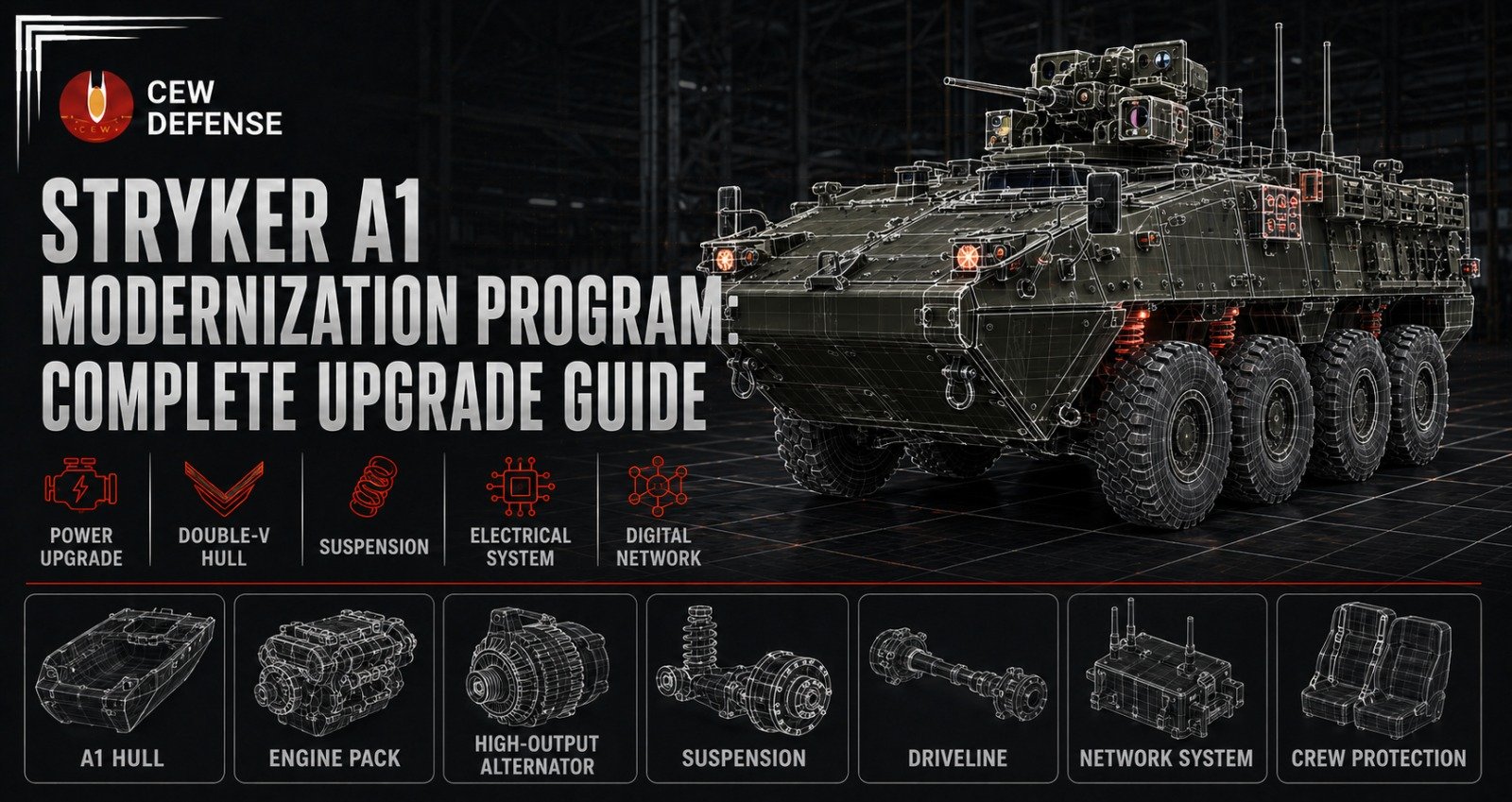
The Stryker A1 modernization program represents a massive leap in modern military vehicle technology. The United States Army initiated this critical upgrade to significantly enhance battlefield survivability. Dedicated engineers redesigned the legacy platforms to successfully meet demanding modern combat requirements. Soldiers now operate these vehicles with superior protection and advanced digital networking capabilities.
This important transformation ensures our armed forces remain absolutely dominant in complex environments. Military leaders recognized the urgent need for comprehensive vehicle improvements across all brigades. The initiative focuses heavily on crew safety without sacrificing any tactical mobility. Funding for this project reflects the high priority placed on soldier welfare.
Experts continuously evaluate the program outcomes to ensure all objectives are met. This foundational shift guarantees long-term operational success for all mechanized infantry units.
Core of the Stryker A1 modernization program
This comprehensive initiative fundamentally changes how mechanized infantry units operate during missions. Program managers focused heavily on system interoperability and essential crew safety improvements. They integrated cutting-edge electronic systems to seamlessly connect diverse battlefield communication networks.
The army continuously updates these systems to maintain tactical superiority over potential adversaries. Logistics teams also benefit from standardized parts across the entire vehicle fleet. This standardization drastically reduces the supply chain complexity during extended military deployments.
Commanders rely on these robust platforms to execute high-stakes maneuvers very confidently. The core design philosophy strongly emphasizes modular scalability for future technological additions. Every aspect of this critical upgrade prioritizes the warfighter's ultimate survival constantly.
- Historical Context and Development
Military planners originally identified critical vulnerabilities in earlier-generation Stryker vehicle models. The defense sector responded by launching this comprehensive modernization effort without delay. Developers carefully studied past combat data to pinpoint specific weaknesses in existing armor. They then engineered robust solutions to address those exact operational shortcomings very directly.
Field reports from active war zones heavily influenced the design choices made by engineers. Prototypes underwent rigorous testing in extreme environmental conditions to verify overall durability. Feedback from actual vehicle operators shaped the final production specifications very accurately.
- Primary Operational Objectives
The main goal involves maximizing crew survivability against evolving asymmetric battlefield threats constantly. Project leaders also prioritized enhanced mobility across diverse and highly challenging terrain types. Furthermore, the initiative demands seamless integration with existing higher-echelon military command networks.
These specific objectives collectively define the strategic value of the entire modernization project. Cost efficiency remains a secondary but highly important consideration for defense budget planners.
-
Enhanced survivability against improvised explosive devices and dangerous roadside bombs reliably.
-
Upgraded digital architecture for real-time data sharing among all combat units.
-
Improved power generation to support new electronic sensor systems very reliably.
-
Extended vehicle lifespan through comprehensive structural and mechanical system reinforcements.
Key Technological Enhancements
Technological advancements form the absolute backbone of the entire Stryker A1 modernization program. Engineers installed heavy-duty suspension components to handle the increased overall vehicle weight. The electrical system received a complete overhaul to support future technological additions easily.
Mechanics also upgraded the braking systems for much safer downhill operational maneuvers consistently. These mechanical changes guarantee reliable performance under extreme and unpredictable combat conditions. Software developers rewrote the vehicle diagnostics code to improve troubleshooting accuracy very significantly. Sensors now provide unprecedented clarity regarding the immediate surroundings of the entire vehicle.
- Advanced Armor and Survivability
Protection remains the absolute highest priority for vehicle designers and military defense planners. The new armor packages deflect kinetic energy from incoming projectiles with remarkable precision. Floor designs now incorporate V-shaped hulls to actively mitigate severe blast impacts successfully.
These structural changes drastically reduce casualty rates during sudden ambush scenarios very significantly. Spall liners actively protect the crew from secondary fragmentation inside the main cabin area.
- Upgraded Power and Mobility
Modern electronics demand substantial electrical power directly from the main vehicle chassis constantly. The upgraded alternator provides consistent energy for all critical onboard electronic systems reliably. Drivers benefit from responsive steering and significantly improved transmission shifting mechanisms daily.
This mobility boost allows units to maneuver rapidly during tactical withdrawal operations safely. Fuel efficiency saw modest improvements despite the addition of heavier protective armor components.
-
Reinforced hull designs to actively deflect dangerous and deadly blast forces completely.
-
High-output electrical systems for future advanced sensor integration capabilities are very reliable.
-
Advanced thermal management to prevent critical engine overheating issues from occurring.
-
Upgraded braking components for steep and slippery terrain navigation very safely.
Broad Operational Impact
The operational impact of the Stryker A1 modernization program extends across all combat brigades. Units report higher mission readiness rates since the initial upgrades began rolling out recently. Commanders appreciate the reliable connectivity during fast-paced and chaotic offensive military operations.
Mechanics note simplified maintenance procedures due to the newly standardized mechanical components. This vehicle now serves as a versatile platform for multiple diverse military mission profiles. Training centers adapted their curriculum quickly to accommodate the new vehicle features easily. Deployment cycles became more predictable thanks to the improved mechanical reliability metrics.
Analysts often compare these upgrades to Bradley M2A3 specifications for broader fleet insights.
- Key Tactical Advantages
Infantry squads gain unprecedented situational awareness through the newly upgraded sensor suites. The vehicle commander utilizes high-resolution displays to accurately track all friendly forces. Gunners engage targets with improved accuracy using the fully stabilized weapon stations.
These tactical edges consistently translate into decisive battlefield victories for the entire unit. Communication latency dropped significantly, enabling much faster decision-making under extreme combat pressure.
- Maintenance and Lifecycle Improvements
Sustainment teams highly value the modular design of the new vehicle components. Technicians can replace faulty modules rapidly without any specialized heavy-lifting tools. This high accessibility significantly reduces operational downtime during prolonged military deployment cycles.
The army expects these vehicles to remain fully operational for several upcoming decades. Spare parts inventory management became much simpler for all dedicated logistics officers.
-
Faster deployment times due to vastly improved mechanical reliability metrics consistently.
-
Reduced logistical footprint through common parts usage across all vehicle fleets.
-
Enhanced crew comfort during extended and demanding operational combat missions safely.
-
Streamlined diagnostic tools for rapid and accurate field troubleshooting procedures daily.
Future Prospects and Strategic Importance
The strategic importance of the Stryker A1 modernization program will only grow over time. Defense planners are already mapping out next-generation enhancements for all future vehicle variants. Researchers continue testing autonomous driving features to significantly reduce the crew workload. The military will likely integrate directed energy weapons on these chassis very soon indeed.
This forward-looking approach guarantees long-term relevance in future complex combat conflicts. International allies are closely monitoring these technological advancements for their own vehicle fleets. Export potential remains highly promising as widespread demand for protected mobility increases steadily.
For more insights into tactical vehicle upgrades and defense innovations, please explore additional military resources.
- Long-Term Military Integration
Brigade combat teams will fully integrate these vehicles into their standard military formations. Training commands are developing specialized curricula to teach soldiers these new systems. Soldiers will master these complex interfaces during realistic and intense field exercises regularly.
This thorough preparation ensures maximum combat effectiveness upon actual field deployment consistently. Doctrine writers are currently updating tactical manuals to reflect these new capabilities.
- Anticipated Future Upgrades
Engineers are currently prototyping active protection systems for the next development phase. Software developers will push over-the-air updates to keep all systems very current. The army plans to install hybrid-electric drives to drastically reduce overall fuel consumption. These innovations will further solidify the absolute dominance of this vehicle platform. Cybersecurity measures will receive continuous reinforcement against all emerging digital threats.
-
Integration of autonomous navigation for significantly reduced crew fatigue levels daily.
-
Installation of active protection systems against dangerous anti-tank guided missiles reliably.
-
Adoption of hybrid-electric powertrains for silent watch operational capabilities is very safe.
-
Continuous software updates to counter emerging and sophisticated cyber threats constantly.
Final Thought
The Stryker A1 modernization program stands as a true proof of modern military innovation. It successfully bridges the gap between legacy reliability and modern warfare demands perfectly. Soldiers will continue to benefit from these critical enhancements in the field regularly. The army remains committed to the continuous improvement of its armored vehicle fleets.
Ultimately, this program secures a decisive advantage for all future generations of warfighters. Investment in such comprehensive upgrades guarantees sustained operational superiority for the military indefinitely. The evolution of this platform proves that adaptability remains the absolute key to survival.