
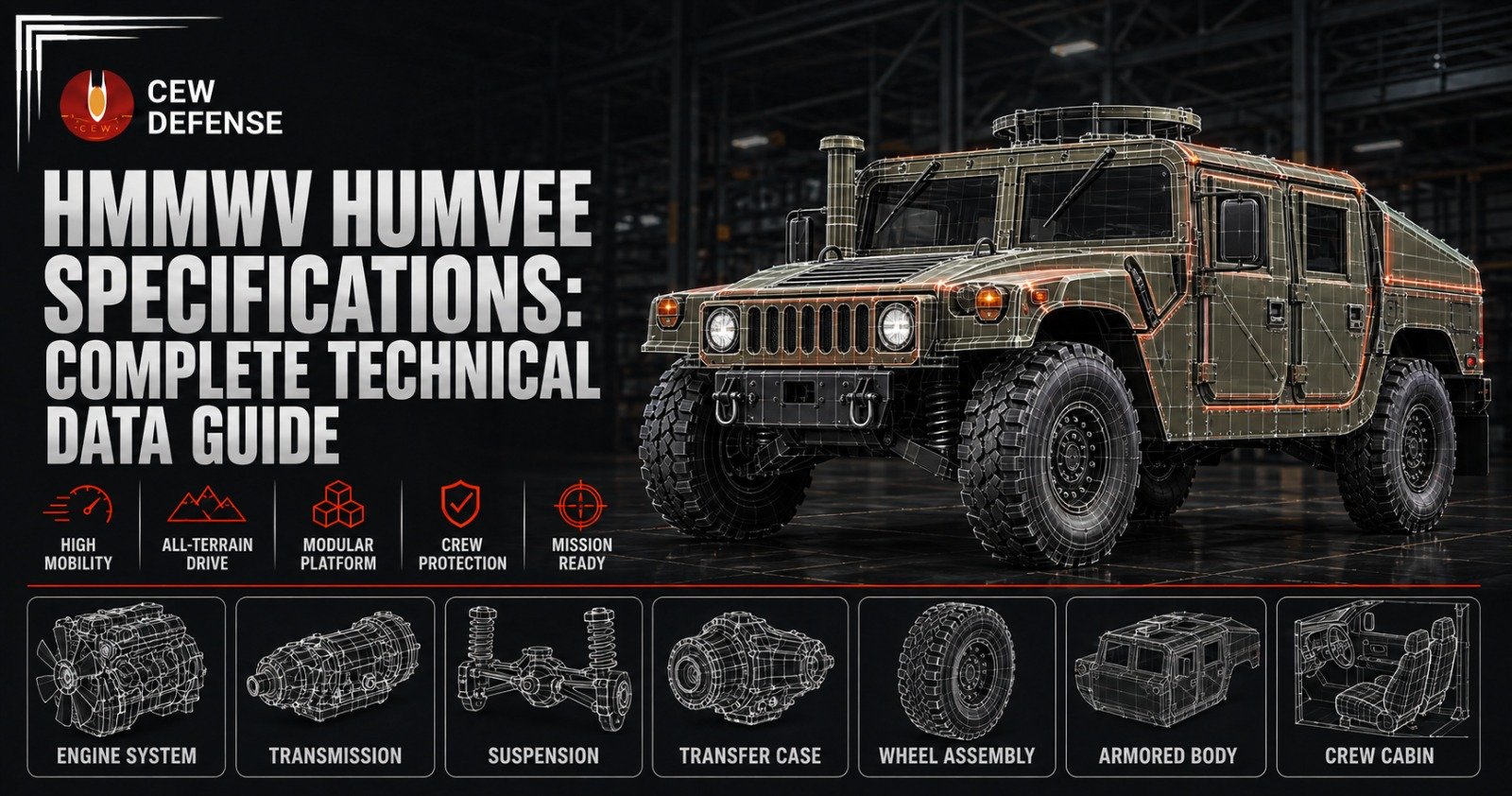
The High Mobility Multipurpose Wheeled Vehicle remains a vital asset for modern military operations worldwide. Engineers designed this tough platform to handle extreme terrain and harsh environmental conditions easily. Soldiers rely on its durable chassis during demanding combat and logistical missions daily.
Understanding the detailed HMMWV Humvee specifications helps enthusiasts appreciate its brilliant engineering designs completely. This vehicle replaced older tactical vehicles like the M151 Jeep and the Gama Goat. AM General developed this machine, building it in Mishawaka, Indiana, for the United States military.
Active United States military service began in nineteen eighty-five with a combat debut in nineteen eighty-nine. This iconic platform later inspired the civilian Hummer brand, which General Motors eventually acquired. We will examine the exact technical details defining this legendary military vehicle very soon below.
Understanding the Engineering Behind the HMMWV
-
Overall length measures approximately one hundred ninety-two inches for standard production models currently available.
-
The standard width spans eighty-four inches to ensure easy vehicle transportability across different regions.
-
Ground clearance reaches sixteen inches for superior obstacle negotiation capabilities during active combat missions.
-
Curb weight starts around five thousand two hundred pounds depending on specific configuration requirements.
The foundational HMMWV Humvee specifications dictate its remarkable performance across diverse environments and harsh climates. Designers prioritized a low center of gravity to prevent rollovers on steep inclines and declines. The aluminum body construction reduces overall weight while maintaining structural integrity during heavy use.
This specific balance allows the vehicle to traverse muddy trails without sinking dangerously into soil. Future modifications will likely focus on enhancing armor without sacrificing essential mobility on rough trails. Engineers are currently developing lighter composite materials for upcoming vehicle iterations regularly within military labs.
These advancements will preserve the core HMMWV Humvee specifications that troops trust implicitly during combat. The military continuously evaluates new technologies to extend the platform's service life for many years.
- Chassis and Structural Integrity
The heavy-duty frame utilizes high-strength steel to withstand massive torsional forces during travel. Welded joints receive special treatment to prevent cracking under extreme vibration and heavy payload stress. This structural foundation ensures that the vehicle maintains its shape even after sustaining minor damage.
Mechanics can easily straighten bent frame components using basic hydraulic tools in forward operating bases.
Physical Dimensions and Weight Distribution Analysis
-
The gross vehicle weight rating dictates the maximum safe operational load limits for every variant.
-
Payload capacity ranges from two thousand five hundred pounds to over five thousand pounds depending on the variant.
-
This substantial payload capacity accommodates soldiers and essential mission equipment easily inside the rear compartment.
-
Overloading the chassis compromises handling and accelerates mechanical wear on critical components significantly over time.
Logistics officers calculate precise weight distributions before every major tactical movement carefully to avoid problems. They ensure the axles bear the load evenly to prevent structural damage entirely during transit. The suspension system absorbs heavy impacts while maintaining passenger comfort levels adequately on bumpy roads. Proper weight management remains absolutely critical for sustaining long-term operational readiness consistently across different units.
- Ground Clearance and Approach Angles
High ground clearance allows the undercarriage to pass over large rocks and debris without scraping. The steep approach angle permits the front bumper to climb vertical obstacles without sustaining damage. Drivers utilize these geometric advantages to navigate steep ravines and deep ditches during tactical movements. These physical dimensions directly influence the tactical routes that commanders select for their motorized convoys.
Powertrain Configurations and Performance Capabilities
-
A strong six-point-two-liter V8 diesel engine powers early production models very reliably.
-
Later variants received a six point five liter turbo diesel upgrade for much better torque.
-
This engine delivers reliable horsepower even in extreme high-altitude conditions regularly during mountain deployments.
-
Mechanics praise the simplicity of the naturally aspirated designs for field maintenance in remote areas.
The transmission system features a three-speed automatic with a two-speed transfer case inside. This setup provides full-time four-wheel drive capability for maximum traction in deep mud. Fuel consumption averages around ten miles per gallon during mixed terrain operations daily for troops. Commanders plan fuel resupply missions carefully based on these known performance metrics before departing.
- Transmission and Drivetrain Mechanics
The automatic transmission shifts smoothly to maintain optimal engine speed across varying terrain conditions easily. A locking differential ensures that both wheels on an axle turn at the exact speed. This mechanical feature prevents wheel spin when one tire loses traction on slippery surfaces completely.
The transfer case allows drivers to switch between two-wheel and four-wheel drive modes. Top speed reaches sixty-five to seventy-plus miles per hour depending on the specific terrain.
Tactical Adaptability and Mission Specific Modifications
-
Troop carriers transport up to eleven personnel, including the driver, very safely across hostile territories.
-
Armament carriers mount heavy machine guns or TOW anti-tank missile systems very securely on roofs.
-
Ambulance variants comfortably accommodate multiple litters and essential medical supplies internally for rapid casualty evacuation.
The military utilizes numerous specialized variants derived from the base HMMWV Humvee specifications very frequently. Each variant serves a distinct purpose within the broader combined arms framework during joint operations. Commanders select the appropriate model based on specific mission requirements and anticipated threats from enemies.
This modularity makes the platform incredibly valuable for diverse operational scenarios consistently across different branches. Special operations forces frequently customize these vehicles for clandestine reconnaissance missions behind enemy lines silently. They remove unnecessary weight to maximize speed and stealth during insertion phases of covert operations.
These specialized units demand peak performance from their tactical transportation assets during high-stakes missions. The base platform readily accepts these extensive modifications without major structural changes to the frame.
- Armor Protection and Survivability Upgrades
Up-armored variants feature hardened steel plating to protect occupants from small arms fire consistently. Blast-resistant seats absorb shockwave energy from improvised explosive devices during dangerous route clearance missions. Transparent armor provides ballistic protection while maintaining excellent visibility for the driver and vehicle commander. These critical upgrades significantly increase the overall weight of the vehicle, requiring suspension modifications regularly.
When evaluating military vehicle modernization, analysts often compare light tactical vehicles to heavier armored systems. For instance, recent M109 Paladin howitzer upgrades demonstrate how the military enhances legacy platforms constantly.
Similarly, the light tactical vehicle receives continuous updates to remain relevant on modern battlefields everywhere. This parallel evolution highlights the importance of sustained defense investment strategies for future combat readiness.
Suspension Dynamics and Terrain Navigation Features
-
Independent suspension on all four wheels ensures continuous ground contact during travel over rough surfaces.
-
This design feature dramatically improves stability on uneven and rocky surfaces during high-speed transit.
-
The central tire inflation system allows drivers to adjust pressure on the move very easily.
-
Lowering tire pressure increases the footprint for better flotation in deep sand easily during desert ops.
Drivers appreciate the tight turning radius that facilitates navigation in confined urban areas very smoothly. The approach and departure angles permit climbing steep embankments without scraping bumpers on rocky terrain. Water-fording capability reaches thirty inches without requiring any special preparation kits for the engine. These features combine to create an unmatched mobility profile for tactical vehicles in the inventory.
- Braking and Steering Control
The braking system utilizes four-wheel disc brakes for reliable stopping power under heavy loads. Hydraulic assist enhances driver control during emergency stops on slippery surfaces, reliably during bad weather. Power steering assists the driver during low-speed maneuvering in tight spaces without physical strain. This feature reduces operator fatigue during extended patrols in urban environments significantly over long shifts.
Communication and Electronic System Integration
-
Modern battlefields require smooth communication between dismounted troops and vehicle crews during active combat missions.
-
The electrical architecture supports multiple radio sets and encrypted data terminals for secure tactical coordination.
-
Analysts frequently reference official HMMWV Humvee specifications when comparing tactical vehicle classes during military evaluations.
-
Upgraded wiring harnesses prevent electrical failures during high-vibration combat operations in extremely rough terrain.
Technicians install antenna mounts on the roof to maximize signal range across vast operational areas. The internal cabin features noise-dampening materials to protect hearing during proper radio use. Power inverters supply steady electricity to sensitive electronic equipment without causing voltage spikes or drops.
This integration ensures uninterrupted command flow during complex joint operations involving multiple military branches constantly.
Fleet Upkeep and Long-Term Operational Readiness
-
Routine preventive maintenance checks keep the vehicle running in peak condition for many active years.
-
Mechanics replace fluids and filters at strict mileage intervals very consistently to prevent internal wear.
-
Field repairs utilize common tools to minimize downtime during active operations in remote forward bases.
Sustaining the fleet requires disciplined adherence to established maintenance schedules by every single vehicle crew. Crews perform daily pre-trip inspections to identify potential mechanical issues early before starting engines. They check tire pressure and fluid levels and belt tension before every mission officially begins.
This proactive approach prevents catastrophic failures in hostile or remote environments where recovery is difficult. The supply chain for replacement parts remains strong and widely accessible for military logistics officers. Numerous third-party manufacturers produce compatible components for older vehicle models to keep them running.
This availability ensures that aging fleets continue operating without major logistical hurdles during extended deployments. Proper care extends the service life of these vehicles well beyond initial estimates very successfully. Reviewing historical HMMWV Humvee specifications reveals the brilliant foresight of its original designers many decades ago.
- Diagnostic Tools and Troubleshooting Protocols
Mechanics utilize electronic diagnostic scanners to identify engine faults quickly within modern vehicle variants very easily. Older models rely on manual troubleshooting guides and physical inspections to locate mechanical problems accurately. Standardized fault codes help technicians order correct parts from the supply chain without any delays.
This systematic approach ensures that broken vehicles return to active service rapidly during combat operations.
Final Thought
The enduring legacy of this platform stems from its exceptional foundational design and rugged construction. Military forces will continue relying on its proven capabilities for years to come in combat. Understanding the detailed HMMWV Humvee specifications provides valuable insight into military logistics and vehicle engineering.
This vehicle represents a perfect balance of simplicity, durability, and tactical utility for soldiers. Future iterations will undoubtedly incorporate new materials and advanced propulsion systems to improve overall efficiency. However, the core philosophy of high mobility and multipurpose utility will remain intact for decades.
Enthusiasts and professionals alike will continue studying this remarkable piece of engineering for a long time. Its impact on modern military history remains truly unmatched and deeply significant for all observers.