
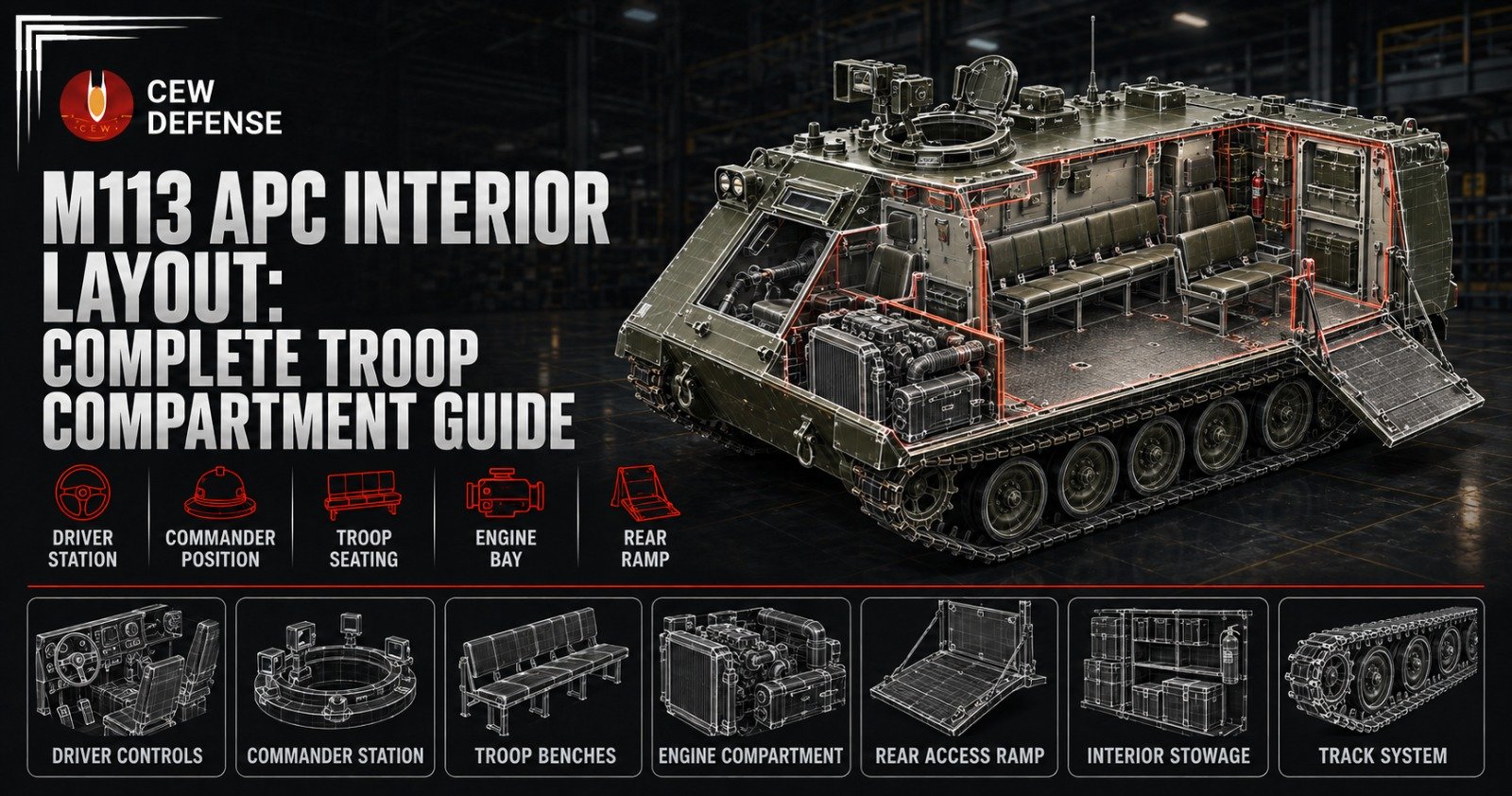
The armored personnel carrier features a classic design that military engineers created for infantry transport missions. Soldiers depend heavily on this internal layout to survive intense combat deployments in very dangerous zones. Crew members trust these specific interior features to provide solid protection during active tactical troop movements.
Designers built the troop compartment to ensure maximum safety while maintaining basic operational readiness for soldiers. The basic internal layout evolved continuously as specific military requirements changed over many decades of service. Modern upgrades completely transform the original cabin space into a highly advanced tactical transport platform.
Military mechanics constantly inspect the crew compartment to guarantee all safety mechanisms function perfectly before battles. Commanders appreciate the functional M113 APC interior because it maximizes limited space inside the thick aluminum hull.
Understanding Armored Personnel Carrier History
- Initial Design Concepts
Engineers initially drafted blueprints to transport infantry squads across heavily contested battlefields without exposing them. They specifically prioritized aluminum armor to keep the overall vehicle weight relatively low for water crossings. The original M113 APC interior focused heavily on basic ergonomics and simple mechanical reliability.
Designers intentionally placed crew seats along the outer walls to maximize the central walking space. They originally installed a single rear ramp that infantry soldiers could quickly operate under direct fire. The initial M113 APC interior layout allowed troops to exit the vehicle rapidly during unexpected ambushes. Military officials quickly approved this basic troop transport concept for mass production and immediate deployment.
- Manufacturing Processes
Factories utilized specialized welding techniques to join thick aluminum plates into a rigid hull structure. Production lines rapidly assembled these lightweight vehicles to meet urgent military demands during the Cold War. Technicians carefully installed internal wiring and basic hydraulic systems to operate the heavy rear cargo ramp.
Quality control teams thoroughly inspected every welded seam to prevent water leaks during amphibious operations. The manufacturing processes remained highly standardized to ensure interchangeable parts across thousands of produced units. This standardized production method significantly reduced overall costs while maintaining acceptable battlefield protection for infantry squads.
- Deployment History
Armored divisions actively deployed these personnel carriers to Vietnam, where the internal layout faced severe testing. Soldiers quickly modified the M113 APC interior by adding extra sandbags for improved underbelly blast protection. Mechanics frequently rearranged the M113 APC interior storage boxes to accommodate captured enemy weapons and ammunition supplies.
The basic M113 APC interior proved highly adaptable for carrying wounded soldiers away from active combat zones. Military commanders eventually realized that the original interior lacked sufficient space for modern communication equipment installations. These battlefield modifications directly influenced future factory upgrades to improve overall troop comfort and combat efficiency.
-
Initial blueprints prioritized basic infantry mobility across difficult terrain.
-
Aluminum armor kept vehicle weight low enough for successful amphibious water crossings.
-
Standardized manufacturing processes allowed rapid assembly of thousands of armored transport vehicles.
Detailed Analysis Of The Internal Spatial Configuration
- Driver Compartment
The driver sits in the front left section while operating complex steering levers and pedals. An integrated periscope array provides the driver with adequate visibility during closed-hatch combat driving. Mechanics routinely adjust the driver's seat to accommodate operators wearing bulky modern ballistic protection vests.
The instrument panel displays important engine metrics that the driver must constantly monitor during tactical movements. A heavy hatch cover protects the driver from overhead shrapnel while allowing quick emergency egress. The steering mechanism requires significant physical strength to operate properly without modern power steering assistance.
- Commander Station
The vehicle commander occupies the rotating cupola positioned directly behind the main driver seating area. Multiple vision blocks surround the commander hatch to provide a complete three-hundred-degree situational awareness. The commander operates the heavy machine gun mounted externally while standing inside the protected cupola space. Internal communication intercoms allow the commander to issue clear orders to the driver and rear troops.
Modern upgrades frequently replace the original M113 APC interior cupola with remote weapon stations to improve crew survivability. The commander continuously monitors the battlefield environment while coordinating tactical movements with adjacent infantry units.
- Troop Seating Area
Infantry soldiers are occupying the rear compartment, sitting on canvas seats attached to the side hull walls. The folding M113 APCc interior seats collapse against the walls to create a flat floor for cargo transport. Soldiers typically sit facing inward to maintain direct visual contact with their squad leader during transit.
Overhead handrails provide stability for standing troops when the vehicle navigates extremely rough and uneven terrain. The limited headroom forces taller soldiers to slouch while the vehicle traverses heavily cratered combat zones. Commanders strictly enforce seating arrangements to ensure rapid and orderly dismounting when reaching the designated drop zone.
-
The driver operates steering levers from the heavily protected front left position.
-
The commander utilizes a rotating cupola to maintain complete battlefield situational awareness.
-
Infantry troops sit on folding canvas seats facing inward along the side hull walls.
Essential Equipment And Storage Features Inside The Cabin
- Weapon Mounting Systems
Internal brackets securely hold assault rifles and light machine guns when soldiers prepare to dismount. Designers specifically positioned these weapon racks near the rear ramp for lightning-fast equipment retrieval. Modern upgrades often include specialized mounting points for anti-tank missiles inside the rear troop area.
Crew members strictly maintain these storage brackets to prevent sensitive optical sights from suffering impact damage. The secure weapon mounts prevent heavy firearms from shifting dangerously during high-speed off-road maneuvers. Soldiers frequently customize these internal racks using heavy nylon straps to accommodate non-standard equipment sizes.
- Ammunition Storage Racks
Armored lockers safely store heavy ammunition boxes away from the direct heat of the main engine. The metal storage racks feature quick-release latches, allowing rapid access during sudden firefights. Designers placed these ammunition compartments low in the hull to maintain a stable center of gravity.
Crew members must carefully inventory every ammunition box before starting any long-distance tactical patrol mission. The internal storage lockers provide solid fragmentation protection in case external projectiles penetrate the thin hull. Quartermasters regularly inspect these storage areas to ensure no moisture damages the sensitive primer compounds.
- Communication Radios
Multiple radio transceivers are occupying the upper hull space near the commander and driver seating positions. These advanced communication devices allow the vehicle crew to coordinate smoothly with supporting artillery units. Technicians carefully route thick antenna cables through the hull roof to connect to external receiving masts.
The internal radio racks feature shock absorbers to protect delicate vacuum tubes from severe track vibrations. Modern digital communication systems completely replace the older analog units to provide encrypted tactical data links. Crew members strictly monitor radio frequencies to avoid enemy signal interception during highly sensitive covert operations.
-
Internal brackets securely hold infantry weapons near the rear troop exit ramp.
-
Armored lockers safely store ammunition boxes away from extreme engine heat sources.
-
Advanced communication radios occupy the upper hull space near the commander station.
Ventilation And Environmental Control Mechanisms
- Air Filtration Systems
A specialized ventilation blower constantly forces fresh outside air into the sealed crew compartment. The intake system features basic mesh filters to prevent large dust particles from entering the cabin. Modern variants include advanced nuclear, biological, and chemical filtration systems to protect soldiers from airborne toxic agents.
Technicians regularly replace these delicate air filters to maintain adequate breathing quality for the enclosed crew. The internal air circulation prevents dangerous carbon monoxide buildup from the main engine exhaust leaks. Designers positioned the ventilation intakes high on the hull to avoid water ingestion during river crossings. Commanders can completely seal the air system when the vehicle enters heavily contaminated combat environments.
- Heating Mechanisms
A compact diesel heater provides essential warmth for soldiers operating in extremely cold northern climates. The heating unit mounts directly behind the driver compartment to distribute warm air through flexible ducts. Mechanics frequently inspect the exhaust pipes of these heaters to prevent deadly gas leaks inside.
Soldiers rely heavily on these heating systems to prevent severe frostbite during long winter patrol missions. The internal temperature gauges allow the commander to monitor cabin heat levels during harsh weather conditions. Modern upgrades completely replace the original diesel heaters with highly efficient electric climate control units.
- Cooling Units
Basic ventilation flaps allow hot air to escape when the vehicle operates in desert environments. Engineers originally avoided installing complex air conditioning to save valuable internal weight and reduce maintenance requirements. Modern desert variants finally integrate powerful roof-mounted cooling units to prevent severe crew heatstroke.
The external cooling condensers require frequent cleaning to remove accumulated sand that severely restricts airflow efficiency. Soldiers frequently open the rear cargo ramp slightly to increase natural airflow during stationary desert operations. The integrated cooling systems significantly improve overall combat readiness by preventing heat exhaustion during extended patrols. Mechanics often compare the cooling efficiency with heavy-duty M88A2 recovery vehicle specs to evaluate thermal designs.
-
The ventilation blower forces fresh air into the sealed troop compartment.
-
A compact diesel heater provides essential warmth during extremely cold weather operations.
-
Modern upgrades integrate powerful roof-mounted cooling units to prevent severe crew heatstroke.
Modernization Programs And Future Upgrade Plans
- Armor Integration
Engineers frequently weld additional steel plates to the exterior hull to improve basic ballistic protection levels. These heavy armor upgrades significantly increase overall vehicle weight and severely strain the original suspension components. Designers often add internal spall liners to catch dangerous metal fragments when external projectiles penetrate the hull.
The extra armor plating forces crews to sacrifice valuable internal storage space to accommodate thicker walls. Military officials strictly monitor these weight increases to ensure the vehicle remains amphibious after armor installations. Future upgrade plans focus on integrating lightweight composite materials to boost protection without adding excessive mass.
- Digital Interfaces
Modernization programs replace analog gauges with bright digital displays to provide clearer engine performance metrics. Technicians install advanced navigation systems that allow commanders to plot tactical routes using secure satellite data. The new digital intercoms provide crystal-clear audio quality even when the main engine runs loudly.
Designers integrate external camera feeds to give the driver excellent rear visibility while closing the heavy ramp. These modern electronic upgrades require substantial electrical power that the original alternator cannot reliably produce. Military engineers continuously update the software to patch security vulnerabilities in the tactical communication networks.
- Power Generation
Mechanics install high-output alternators to supply adequate electricity for modern radios and digital targeting computers. The upgraded power systems require heavier wiring harnesses that technicians carefully route through the tight cabin. Commanders rely on auxiliary power units to operate sensitive electronic equipment while the main engine remains off.
These modern electrical generators produce significant heat that the internal ventilation system must continuously remove. Future designs will likely incorporate hybrid powertrains to reduce fuel consumption during silent surveillance operations. The increased electrical demand completely transforms the original simple wiring architecture into a highly complex network. Readers can explore our detailed M113 APC specs and history guide to understand the original factory blueprints. Maintaining the tracks requires to be specialized OEM military vehicle undercarriage parts to ensure reliable mobility across rough terrain.
-
Engineers weld additional steel plates to improve basic ballistic protection levels.
-
Modernization programs replace analog gauges with bright digital displays for clearer metrics.
-
Mechanics install high-output alternators to supply adequate electricity for modern digital computers.
Final Thought
The internal configuration continues to serve military forces reliably despite its original vintage design limitations. Engineers will undoubtedly be developing further modernization packages to extend the operational service life significantly. Soldiers will always appreciate the rugged protection provided by this legendary armored personnel carrier platform.
The internal layout balances perfectly troop safety with essential mechanical simplicity for demanding battlefield environments. Military historians will forever respect the profound impact this specific vehicle interior created on modern warfare tactics.