
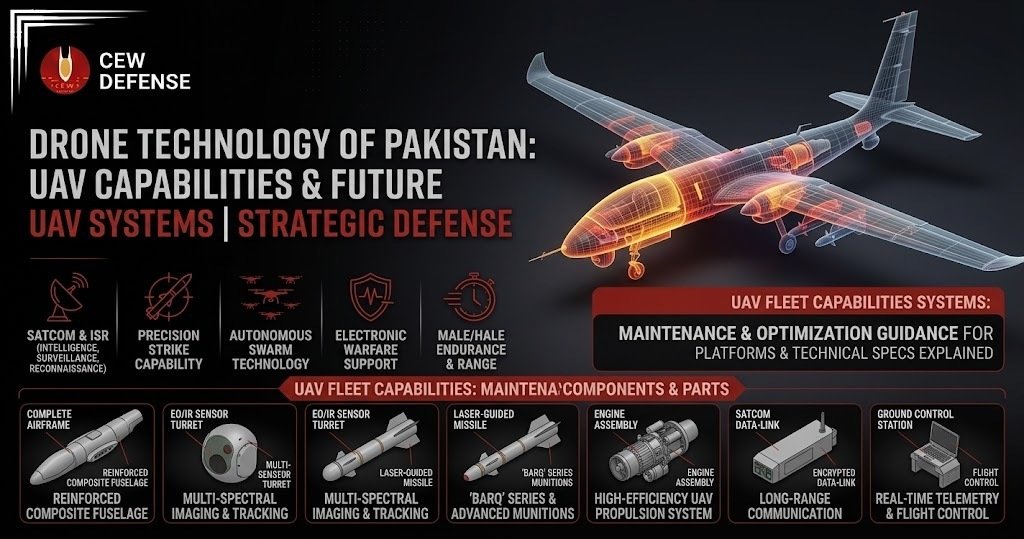
Military forces require reliable aerial platforms to maintain tactical advantages during complex operations across diverse terrain. The rapid advancement of drone technology in Pakistan has transformed modern military operations across the region. National engineering facilities follow international standards to guarantee strict quality control during complex assembly processes. The production environment is also very strict compliance with international industrial safety regulations. Defense organizations depend on these indigenous platforms to conduct persistent surveillance missions over hostile and difficult territories. Continuous research programs allow local engineers to reduce reliance on foreign suppliers for critical aerial systems.
Historical Development of Unmanned Systems
- Early Indigenous Research Programs
National engineering commissions initiated early research programs to develop basic remote-controlled aerial targets for training. These initial projects provided local engineers with valuable experience in aerodynamics and basic flight control systems. The military recognized the strategic value of unmanned systems for gathering intelligence without risking pilot lives. Early prototypes suffered from limited endurance and poor sensor payloads compared to modern Western equivalents. Persistent funding allowed research teams to overcome early technical hurdles and improve overall system reliability significantly. The establishment of dedicated defense companies accelerated the transition from basic prototypes to operational military platforms.
- Transition to Armed Combat Platforms
The strategic shift toward armed platforms marked a major milestone for regional aerial combat capabilities. Engineers successfully integrated laser-guided missiles onto existing airframes to create highly effective hunter-killer systems. This capability allowed armed forces to conduct precise strikes against high-value targets in remote areas. The successful deployment of armed systems established the nation as a capable player in unmanned warfare. Continuous improvements in drone technology in Pakistan enabled longer flight times and heavier weapon payload capacities.
Key Indigenous Unmanned Aerial Vehicles
- The Burraq Combat System
The Burraq system represents a significant achievement in local aerospace engineering and weapons integration capabilities. This medium-altitude, long-endurance platform carries precision-guided munitions for striking ground targets accurately. Military forces first utilized this combat system during major counter terrorism operations in the tribal regions. The successful combat debut demonstrated the reliability of indigenous guidance systems under extreme operational stress conditions. Ground control stations communicate with the aircraft via secure satellite links to extend operational range significantly. Maintenance crews perform regular inspections to ensure the delicate optical sensors remain perfectly calibrated before missions.
Read our detailed guide on military vehicle maintenance to understand ground support vehicle requirements.
- The Shahpar Surveillance Series
The Shahpar series provides tactical commanders with real-time video feeds from active operational areas. This tactical unmanned aircraft features a compact design that allows rapid deployment from mobile launch trailers. Electro-optical sensors mounted on the gimbal provide clear imagery during both day and night operations. The system requires minimal ground support equipment and can operate effectively from austere forward bases. Continuous software updates improve the automatic target recognition algorithms used by the onboard flight computers. The latest iteration features an improved engine that significantly extends the maximum endurance of the aircraft. The ongoing evolution of drone technology in Pakistan ensures these tactical platforms remain relevant against modern threats.
International Acquisitions and Partnerships
- Turkish Bayraktar Systems Integration
Strategic partnerships with allied nations have allowed the military to acquire highly advanced foreign combat systems. The acquisition of Turkish tactical drones provided immediate access to proven, combat-tested aerial platforms. Local engineers received extensive training to maintain and repair these sophisticated foreign systems independently. Joint production agreements facilitate the gradual transfer of critical manufacturing technologies to local defense industries. These advanced platforms feature superior sensor suites and longer operational ranges than earlier indigenous models. Integrating foreign systems requires careful modifications to existing ground control networks and secure communication datalinks.
- Chinese Wing Loong Platforms
The military also operates heavy combat drones acquired from Chinese aerospace manufacturers for strategic missions. These large platforms carry heavy weapon payloads and feature advanced synthetic aperture radar for all-weather operations. The acquisition of these systems filled a critical gap in long-range strategic strike capabilities. Maintenance crews follow strict schedules to preserve the complex composite airframes of these heavy aircraft. Joint exercises allow pilots to practice coordinating strikes between indigenous platforms and heavier foreign systems. The combination of local and foreign systems creates a highly versatile and layered aerial combat force. The continuous expansion of drone technology in Pakistan relies heavily on these strategic international defense partnerships.
Strategic Impact on Regional Defense
- Border Security Operations
Unmanned systems provide persistent surveillance along volatile border regions to detect cross-border infiltration attempts. Thermal cameras allow security forces to track suspicious movements during the night and through heavy fog. Rapid response units use real-time intelligence from these platforms to intercept hostile elements quickly. The constant aerial presence acts as a strong deterrent against smuggling and illegal border crossings. Commanders coordinate ground patrols with aerial assets to secure vast stretches of difficult mountainous terrain. The effective use of drone technology in Pakistan has significantly reduced security incidents along western frontiers.
- Naval Maritime Patrols
Naval forces utilize specialized unmanned aircraft to monitor vast maritime zones and protect critical sea routes. These maritime patrol platforms carry specialized radar systems designed to detect small surface vessels accurately. The navy uses these systems to monitor illegal fishing activities and protect exclusive economic zones. Shipborne variants operate directly from frigates to extend the radar horizon of the naval fleet. Continuous exposure to harsh saltwater environments requires rigorous washing and corrosion prevention procedures after every flight. The naval aviation branch continues to invest heavily in expanding its maritime unmanned surveillance capabilities.
Manufacturing and Quality Standards
Defense manufacturers implement strict quality control protocols to ensure every aircraft meets rigorous military specifications. Automated testing rigs simulate extreme flight maneuvers to verify the structural integrity of composite wings. Environmental chambers expose electronic components to severe temperature fluctuations to guarantee reliable operation in deserts. The following table outlines the standard maintenance intervals for critical components of indigenous combat systems. Strict adherence to these maintenance schedules prevents sudden mechanical failures during high-stakes combat missions. Quality assurance teams document every manufacturing step to maintain complete traceability for critical flight components. The rigorous testing of drone technology in Pakistan guarantees operational reliability under extreme environmental conditions.
Future Prospects and Swarm Technologies
- Artificial Intelligence Integration
Research institutions are actively developing artificial intelligence algorithms to improve autonomous flight capabilities significantly. Machine learning models allow aircraft to identify and classify ground targets without human operator intervention. Autonomous navigation systems enable platforms to fly complex missions even when satellite communication links fail. Engineers are testing neural networks that allow multiple aircraft to coordinate their flight paths automatically. The integration of smart algorithms reduces the cognitive workload on human operators in control stations. Future combat systems will rely heavily on these autonomous decision-making capabilities to survive contested airspace.
- Stealth and Endurance Upgrades
Aerospace engineers are designing new airframes with reduced radar cross sections to evade enemy air defenses. Advanced composite materials absorb radar waves and reduce the thermal signature of the exhaust systems. New engine designs consume less fuel to dramatically extend the maximum endurance of future platforms. Solar panels integrated into the wings could theoretically allow certain high-altitude platforms to fly indefinitely. Stealth capabilities will allow unmanned systems to penetrate deep into hostile territory without being detected. The next generation of drone technology in Pakistan will prioritize survivability in highly contested airspace environments.
Industrial Base and Workforce Development
A robust domestic industrial base is essential for sustaining long-term unmanned aerial vehicle production. Technical universities collaborate with defense companies to train the next generation of aerospace engineers. Specialized training programs teach mechanics how to repair complex composite structures and advanced avionics systems. The government provides financial incentives to encourage private companies to invest in aerospace manufacturing technologies. A skilled workforce ensures that the nation can maintain its strategic independence in military aviation. Continuous investment in human capital remains the most critical factor for future aerospace success.
Economic Impact of Aerospace Exports
The successful development of indigenous platforms has opened new opportunities for international defense exports. Foreign military delegations frequently visit local airshows to evaluate the capabilities of these combat systems. Export contracts generate valuable foreign exchange and help offset the high costs of domestic research. International partnerships facilitate the transfer of advanced manufacturing techniques back to the local industrial base. The global defense market increasingly recognizes the reliability and cost-effectiveness of these aerial platforms. Expanding the export footprint of drone technology in Pakistan strengthens the overall national economy significantly.
Conclusion
Unmanned aerial systems have fundamentally altered the strategic military balance across the entire South Asian region. Continuous investment in research and development ensures that local platforms remain competitive against foreign alternatives. The integration of advanced sensors and precision weapons provides commanders with highly effective tactical options. Strategic international partnerships complement domestic efforts by providing access to cutting-edge foreign aerospace technologies. Future advancements in artificial intelligence and stealth will further enhance the capabilities of these systems.