
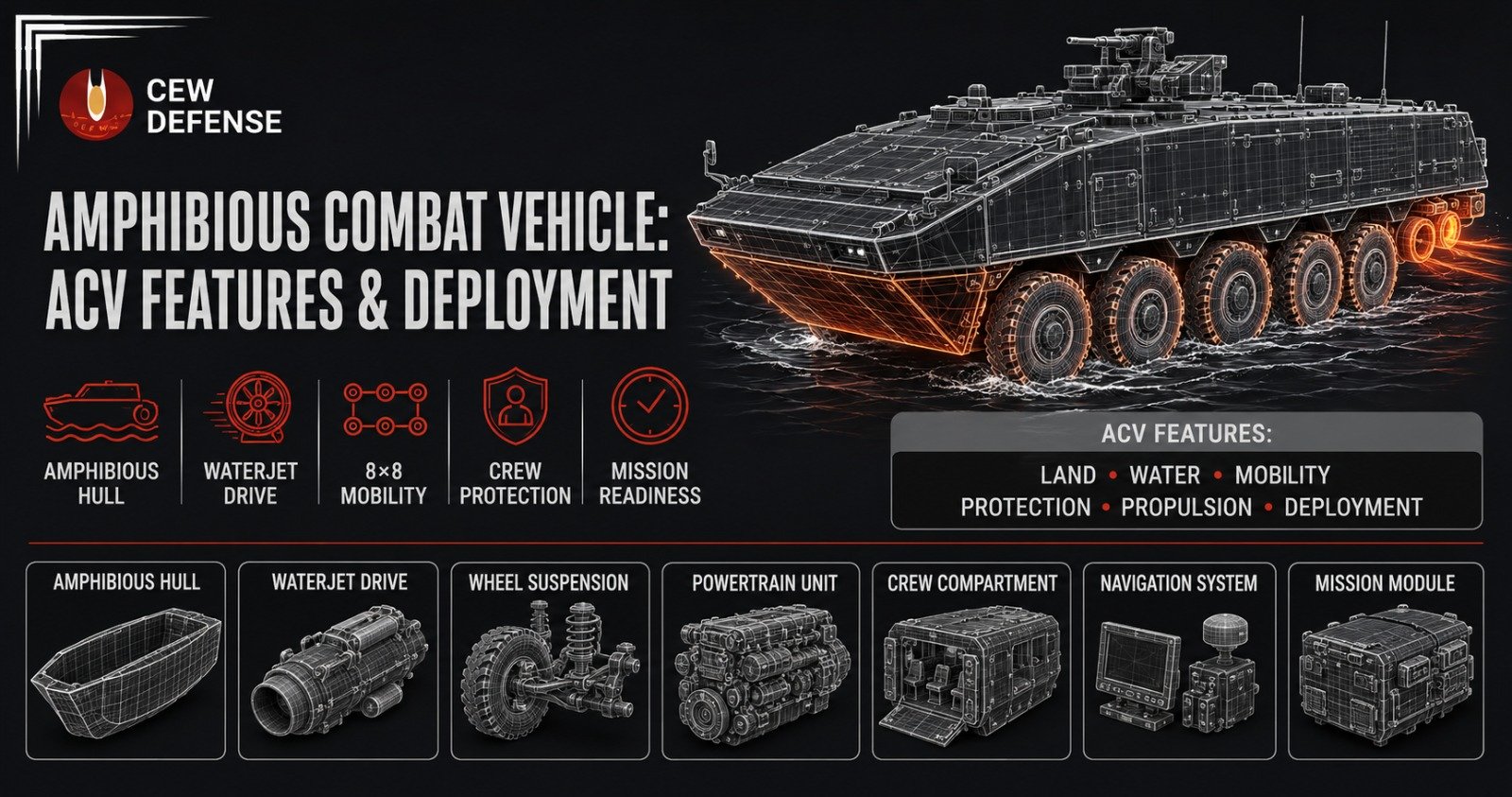
Introduction to Modern Amphibious Platforms
The amphibious combat vehicle represents a critical asset for modern marine infantry forces worldwide. Military planners require highly versatile platforms capable of seamless land and water transitions effectively. Engineers design these specialized machines to project power directly from naval vessels to hostile shores. We analyze the comprehensive technical specifications and operational capabilities of these advanced systems accurately. This detailed guide provides essential insights for defense analysts and procurement professionals across regions.
Modern coastal defense strategies demand exceptional mobility across diverse and challenging geographical environments globally. The amphibious capability allows ground forces to bypass heavily fortified coastal defenses entirely. Commanders utilize these versatile vehicles to execute complex ship-to-shore maneuvers with overwhelming speed. Understanding the core design principles is essential for evaluating modern expeditionary warfare capabilities. The strategic value of these vehicles extends far beyond simple troop transportation duties.
Historical Evolution of Water-Capable Armor
Early Amphibious Tank Designs
Military engineers initially developed early amphibious tanks during the first half of the twentieth century. The Landing Vehicle Tracked served as a crucial transport for troops during Pacific island campaigns. Designers added simple floatation screens to standard tracked chassis to achieve basic buoyancy. These rudimentary modifications provided essential mobility but offered minimal protection against enemy fire. Post-war developments focused heavily on improving hydrodynamic performance and overall crew survivability rates.
The LVTP-5 introduced a larger hull to accommodate more troops and heavier amphibious assault cargo. Engineers integrated more powerful engines to overcome the immense drag forces present in water. These incremental improvements laid the foundational knowledge for modern amphibious assault vehicles globally. The Vietnam War further highlighted the critical need for reliable water-crossing capabilities in combat. Engineers modified existing designs to handle the unique challenges of riverine and delta environments.
Modern Engineering Advancements
Contemporary designs completely abandon floatation screens in favor of purpose-built hydrodynamic hull shapes. The Expeditionary Fighting Vehicle program explored high-speed planing hulls for rapid water transit. Although that specific program ended, its research heavily influenced current developmental efforts worldwide. Modern materials science allows for lighter armor without sacrificing essential ballistic protection levels. Advanced computational fluid dynamics now optimize hull shapes before physical prototypes even exist.
Engineers simulate water flow patterns to minimize drag and maximize propulsion efficiency accurately. This digital approach drastically reduces development time and lowers overall research costs significantly. The resulting vehicles achieve much higher water speeds than their historical predecessors consistently. The integration of composite materials further reduces the overall weight of the vehicle structure. Aluminum alloys provide a strong yet lightweight foundation for the main armored hull.
For a detailed technical overview, explore our guide to the Multiple Launch Rocket System (MLRS), including its types, range and battlefield capabilities.
Core Technical Specifications and Performance
Propulsion and Hydrodynamics
Water propulsion relies on specialized water jets or highly modified track systems for movement. The water jet systems provide superior steering and speed in deep water environments. Drivers control the vehicle direction using adjustable nozzles that vector the thrust precisely. This mechanism allows rapid acceleration and tight turning radii during complex naval approaches. Land mobility requires a robust suspension system to handle heavy armor weights effectively.
The torsion bar suspension absorbs severe shock loads during high-speed cross-country maneuvers. Track pads distribute the massive vehicle weight evenly to prevent sinking in soft sand. Proper track tension remains critical for optimal performance during both land and water operations. The transition from water to land requires seamless integration of both propulsion systems. Drivers must carefully manage engine power to prevent stalling when the tracks engage ground.
Armor Protection and Survivability
Survivability remains the paramount design consideration for any modern armored combat platform globally. Engineers integrate a robust V-hull design to deflect explosive blast energy effectively away. Modular armor packages allow field units to upgrade protection levels rapidly based on threats. The vehicle also accommodates active protection systems to intercept incoming anti-tank projectiles accurately. The base aluminum hull protects occupants from small arms fire and artillery shrapnel.
Add-on steel armor kits provide enhanced protection against heavier kinetic energy penetrators consistently. Spall liners coat the interior surfaces to prevent lethal fragmentation if the armor breaches. Fire suppression systems activate automatically to extinguish engine or ammunition compartment fires instantly. Chemical, biological, radiological, and nuclear protection systems ensure crew safety in contaminated environments. The overpressure system prevents hazardous particles from entering the crew compartment through ventilation intakes.
Primary Variants and Mission Roles
Primary Variant Configurations
The platform features multiple distinct variants tailored for specific tactical requirements across global theaters. Each configuration maximizes operational utility while maintaining common logistical footprints effectively for supply chains. This high degree of component commonality drastically simplifies maintenance training and spare parts management. Mechanics can easily transition between different variants without requiring extensive additional technical education. The primary operational variants include the following specialized configurations for diverse mission profiles:
- Personnel Variant: Transports infantry squads safely across hostile and contested coastal terrains effectively.
- Command Variant: Serves as a mobile tactical operations center for field commanders globally.
- Recovery Variant: Provides critical towing and repair capabilities for disabled vehicles consistently.
- Logistics Variant: Carries essential ammunition and supplies to forward operating bases accurately.
Tactical Applications
The Personnel variant forms the backbone of the amphibious assault battalion worldwide currently. It provides protected mobility for dismounted troops during complex offensive and defensive operations. The Command variant integrates advanced communication suites to facilitate real-time decision-making processes. Logistics models feature specialized interior layouts to accommodate palletized cargo and heavy equipment. The Recovery variant plays a crucial role in maintaining the operational tempo of units. Heavy-duty winches and specialized towing bars allow crews to extract disabled vehicles from danger.
Operational Deployment Strategies
Ship-to-Shore Maneuvers
Naval commanders utilize these vehicles to project combat power directly from amphibious assault ships. The ship-to-shore connector capability allows forces to bypass traditional port infrastructure entirely. Vehicles launch from the well deck of the mothership and traverse open ocean swells. This over-the-horizon assault capability keeps naval vessels safely out of range of coastal artillery.
Formation tactics dictate the spacing and speed of vehicles during the final approach phase. Squad leaders maintain strict radio silence to preserve operational surprise during the initial assault. Once ashore, the vehicles immediately transition to standard mechanized infantry movement techniques effectively.
Inland Waterway Operations
Weather conditions significantly impact the overall safety and success of ship-to-shore operations globally. High sea states can cause vehicles to take on dangerous amounts of water over the bow. Commanders must carefully monitor meteorological data before authorizing the launch of amphibious forces. Advanced stabilization systems help mitigate the effects of rough seas during the transit phase.
Beyond coastal assaults, these vehicles excel at crossing wide rivers and flooded terrain globally. Combat engineers utilize the amphibious capability to secure vital bridgeheads before heavy armor arrives. The vehicles can ford deep water obstacles that would completely stall standard wheeled trucks.
Vehicle commanders must constantly monitor water depth and current speed to maintain safe transit. Successful river crossings often dictate the overall momentum of a major military campaign effectively. Urban flooding presents a unique challenge that these vehicles are specifically designed to overcome.
Natural disasters or destroyed infrastructure can turn city streets into impassable waterways for vehicles. Amphibious combat vehicles can navigate flooded urban environments to deliver essential supplies and evacuate civilians. This dual-use capability makes them invaluable assets for both military and humanitarian missions.
Maintenance and Sustainment Challenges
Corrosion Prevention and Care
Saltwater exposure presents a severe and constant threat to all metallic vehicle components globally. Maintenance crews must rigorously wash down vehicles with fresh water after every ocean operation. Specialized corrosion inhibitors are applied to critical joints and exposed metal surfaces regularly. Failure to follow strict washing protocols leads to rapid structural degradation and mechanical failures.
Electrical systems require extra attention to prevent salt buildup and subsequent short circuits. Technicians utilize specialized dielectric grease on all connectors to ensure reliable signal transmission. Water ingress sensors alert the crew immediately if bilge pumps fail to remove fluid.
Undercarriage and Track Maintenance
The track system requires rigorous maintenance to ensure optimal vehicle mobility across all terrains. Maintenance crews must inspect track tension and pad condition after every single mission consistently. Improper track tension accelerates wear on the drive sprockets and idler wheels significantly. We recommend replacing worn track shoes before they damage the road wheels completely. These rubber pads reduce noise and protect paved roads during long road marches.
Manufacturers produce high-strength steel track shoes with integrated rubber pad interfaces for durability. The precision forging process guarantees superior strength and extended service life for these components.
The undercarriage system includes five road wheels and three return rollers per side. Sand and mud ingestion can quickly destroy track pins and bushings if not managed. Crews must clean the undercarriage thoroughly after operating in sandy or muddy environments. High-pressure washers remove compacted debris that accelerates the wear rate of moving parts. Regular lubrication of track pins prevents premature binding and reduces friction heat generation.
Heavy-duty torsion bars absorb shock loads to protect the hull and crew members effectively. We supply replacement suspension components that meet original equipment manufacturer specifications accurately always.
Future Technological Integrations
Emerging Propulsion and Navigation Technologies
Defense contractors actively research hybrid electric drives to enhance stealth capabilities of future vehicles. The hybrid electric system allows the vehicle to operate silently during covert infiltration missions. Electric motors provide instant torque for rapid acceleration without loud noise of diesel engines. This silent watch capability significantly improves survivability during night operations and ambush scenarios. Future technological integrations will focus on the following key areas for platform enhancement:
- Hybrid Powertrains: Offer silent watch capabilities and reduced thermal signatures for stealth operations.
- Autonomous Navigation: Utilize artificial intelligence algorithms to optimize route planning and threat detection.
- Advanced Sensors: Provide 360-degree awareness and automatic target recognition capabilities for crews.
- Directed Energy: Integrate defensive lasers to intercept incoming drone swarms and projectiles.
Artificial Intelligence Integration
This recovered energy powers auxiliary systems and reduces overall fuel consumption of the vehicle. Lower fuel requirements simplify the logistical burden and extend the operational range of the fleet. Artificial intelligence algorithms will soon optimize route planning and threat detection for autonomous navigation. The autonomous navigation system allows the vehicle to follow a lead vehicle without a driver. This technology reduces crew fatigue during long transit phases and minimizes human error. Machine learning models continuously improve the driving behavior based on accumulated operational data.
Sensor fusion combines data from radar, lidar, and cameras to create complete environmental picture. The computer system identifies obstacles and calculates safe paths in real-time accurately. Human operators can override the autonomous system instantly if the situation demands manual control. This collaborative autonomy enhances overall unit safety and operational efficiency across diverse terrains. Unmanned variants of the amphibious combat vehicle will soon perform the most dangerous missions. Remote operators can guide these vehicles through heavily mined beaches and fortified coastal defenses.
Global Adoption and Strategic Impact
International Defense Partnerships
International defense partnerships actively facilitate the global proliferation of advanced amphibious vehicle technologies. Allied nations frequently collaborate on joint development programs to share research and development costs. Export variants undergo specific modifications to meet the unique operational requirements of foreign militaries. Training programs ensure international crews master the complex systems and maintenance procedures effectively.
Foreign military sales generate significant revenue for the domestic defense industrial base consistently. These sales also strengthen diplomatic ties and foster long-term strategic relationships with partner nations. Technology transfer agreements allow allied countries to develop their own domestic maintenance and upgrade capabilities.
Future Coastal Warfare Requirements
Combined training exercises validate these interoperability standards and identify areas for further improvement. This collaborative approach to defense procurement maximizes the effectiveness of allied military forces. Joint research initiatives focus on developing next-generation materials for future amphibious hull construction. Scientists explore advanced composites that offer superior strength-to-weight ratios compared to traditional metals.
These material innovations will further enhance the speed and payload capacity of future vehicles. International cooperation accelerates the overall pace of technological breakthroughs in this specialized field. The amphibious combat vehicle fundamentally transforms how modern armies project power across coastal regions.
Long-Term Strategic Advantages
Its exceptional blend of water speed, land mobility, and digital connectivity ensures battlefield dominance. Continuous technological integration guarantees the platform will meet future operational demands effectively worldwide. Defense forces must prioritize comprehensive training and rigorous maintenance to maximize these capabilities. The transition to this modern platform represents a critical investment in national security globally.
Military leaders must carefully balance procurement costs with long-term operational and sustainment requirements. Strategic planning ensures that the fleet remains adequately funded and supported throughout its lifecycle. This comprehensive analysis highlights the profound impact of the vehicle on modern expeditionary warfare. Future conflicts will increasingly focus on coastal regions and contested littoral environments worldwide.
The ability to rapidly deploy combat power across water obstacles will remain decisive advantage. Nations that invest in advanced amphibious capabilities will maintain significant strategic edge over adversaries.