
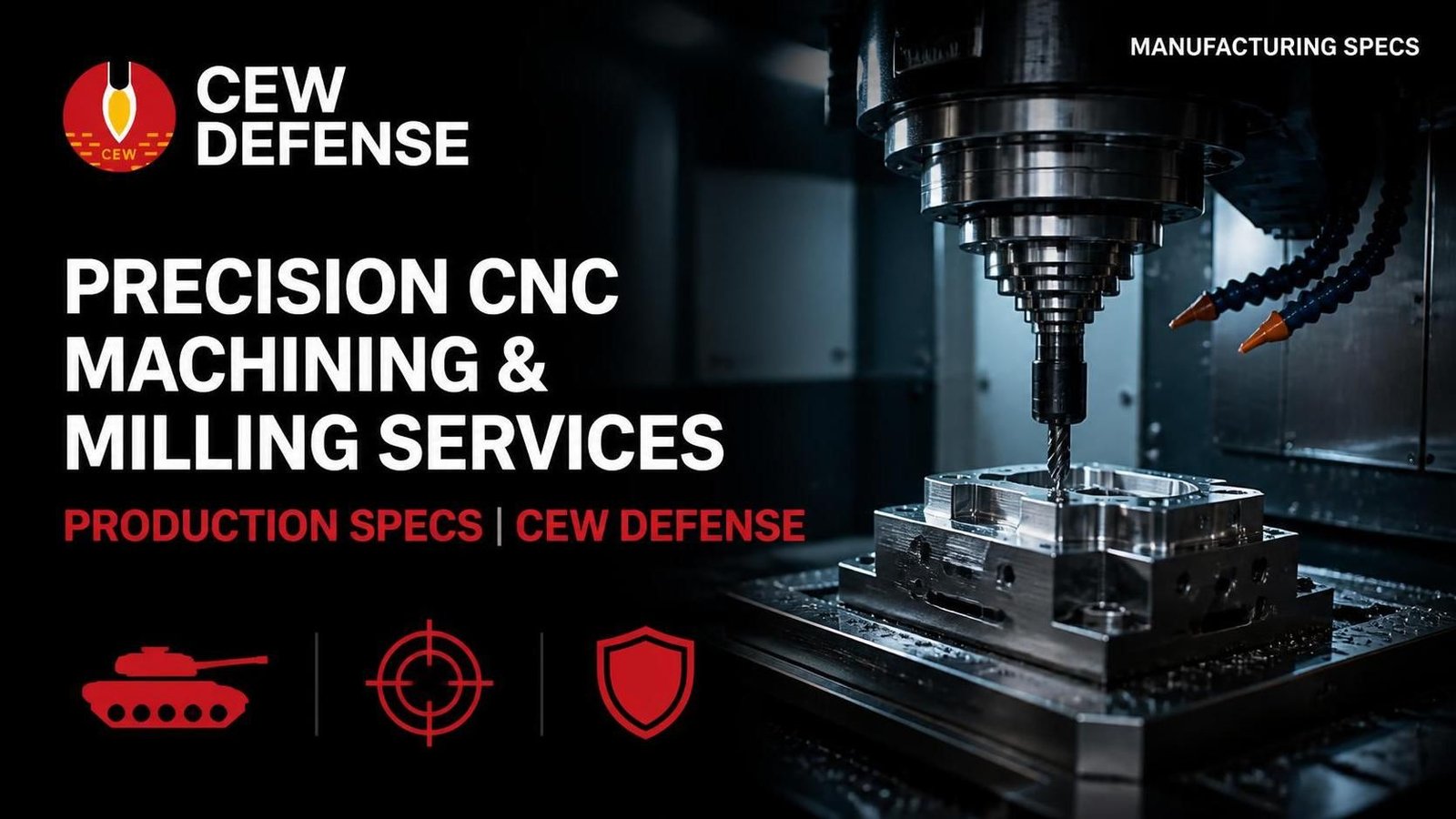
Our facility delivers high-precision CNC machining services tailored specifically for defense and heavy industrial applications across multiple sectors. We utilize state-of-the-art multi-axis milling centers to produce complex geometries with exceptional accuracy consistently. Our engineering team translates intricate CAD designs into functional metal components meeting strict military specifications effectively. Every operation undergoes rigorous verification to ensure dimensional integrity and surface finish requirements are met accurately throughout all production batches.
This unwavering commitment to precision manufacturing establishes our reputation as a reliable partner for critical component sourcing without compromise. We understand that defense contractors require absolute certainty in every delivered part, which is why we have built our entire operational philosophy around zero-defect production standards and comprehensive traceability documentation satisfying even the most stringent audit requirements. Quality remains non-negotiable because mission success depends entirely on the reliability of each manufactured component.
Core Milling Technologies and Equipment Specifications
We operate advanced vertical and horizontal machining centers equipped specifically for demanding defense component manufacturing tasks requiring extreme precision. Our 5-axis simultaneous machining capability allows single-setup production of complex undercarriage and structural parts efficiently without secondary operations.
High-speed spindles reaching 24,000 RPM enable superior surface finishes on hardened steel alloys consistently during extended runs. Integrated probing systems perform in-cycle inspection eliminating secondary setup errors and reducing cycle times significantly. Robust machine construction dampens vibration ensuring consistent tolerance achievement during aggressive material removal operations effectively. To provide complete transparency regarding our technical capabilities, here are the primary equipment specifications defining our production capacity:
- Haas VF-2SS Vertical Machining Centers with 40-taper spindles and 12,000 RPM maximum speed
- Doosan DNM 5700 5-Axis Simultaneous Milling Center for complex geometry production
- Okuma LB3000 EX II Turning-Milling Compound Machines for integrated operations
- Renishaw OMP60 Wireless Tool Setting and Work Probing Systems for in-process verification
- Zeiss Contura G2 CMM with VAST XXT Scanning Probe for final dimensional validation
Material Expertise and Processing Standards
Our machinists possess extensive experience processing exotic and standard alloys used in military grade manufacturing environments worldwide. We routinely machine 4340 chromoly steel, 7075-T6 aluminum, titanium Ti-6Al-4V, and Inconel superalloys accurately without deviation. Specialized tooling geometries and cutting parameters are optimized for each material’s unique thermal and mechanical properties consistently. Proper coolant selection and chip management strategies prevent work hardening and tool wear during extended production runs effectively.
Heat treatment coordination ensures final parts achieve required hardness and toughness specifications reliably across all batches. Understanding specific characteristics of each alloy is fundamental to achieving consistent quality, so we maintain detailed material processing guides documenting optimal feeds, speeds, and tool geometries for every stock item in inventory. These internal references ensure that regardless of which operator runs a particular job, machining parameters remain identical and repeatable batch after batch without variation.
Tolerance Achievement and Quality Assurance Protocols
Maintaining tight tolerances is fundamental to our precision engineering services for defense sector clients demanding absolute reliability. We consistently hold ±0.0005 inch (±0.0127mm) tolerances on critical features through meticulous process control without exception. Coordinate Measuring Machines verify GD&T callouts including true position, flatness, and concentricity accurately using calibrated instruments. First Article Inspection Reports document complete dimensional compliance before full production release effectively following established protocols.
Statistical Process Control charts monitor key characteristics identifying trends before non-conforming conditions develop consistently over time. Our quality laboratory operates independently from production ensuring unbiased inspection results truly reflecting part conformance standards. All measurement equipment follows strict calibration schedules traceable to national standards, and environmental controls maintain stable temperature and humidity levels preventing thermal distortion during sensitive measurement operations. This systematic approach to quality assurance gives customers complete confidence that every dimension on every part meets exact specifications without fail.
Read our article on Pakistan Militray Power, comprehensive analysis and strength.
Defense Sector Specific Applications and Components
Our CNC milling services directly support armored vehicle and weapons system undercarriage component production for modern combat platforms. Track shoe assemblies, road wheel hubs, and suspension mounts require exceptional fatigue resistance and dimensional stability under extreme loads. We manufacture sprocket segments with precise tooth profiles ensuring smooth track engagement during intense operational scenarios effectively. Idler wheel housings are machined to maintain proper bearing alignment preventing premature seal failure accurately throughout service life.
These mission-critical components undergo enhanced NDT testing validating internal soundness and surface integrity before delivery consistently. The demanding nature of defense applications means we must account for factors commercial manufacturers never consider, such as ballistic impact resistance, electromagnetic compatibility, and long-term storage stability. Our engineering team works closely with customer design engineers to understand specialized requirements incorporating them into manufacturing processes from program inception.
Industrial and Commercial Manufacturing Support Services
Beyond defense contracts we serve automotive, energy, and general industrial sectors requiring high volume machining with competitive pricing. Our flexible manufacturing cells accommodate both prototype quantities and sustained production runs efficiently without disruption. Rapid changeover protocols minimize downtime between different part numbers maximizing equipment utilization consistently throughout shifts. Dedicated project managers coordinate scheduling ensuring on-time delivery for JIT inventory requirements effectively across supply chains.
Cost optimization studies identify opportunities for design simplification and material substitution without compromising performance accurately. We recognize commercial customers face different pressures than defense contractors, particularly regarding cost competitiveness and delivery speed, so streamlined quoting and production workflows exist specifically for high-mix, medium-volume environments. These processes allow responding to RFQs within 24 hours and delivering first articles in under two weeks while maintaining same quality standards applied to defense programs.
Programming and Process Optimization Strategies
Advanced CAM programming drives efficient CNC production workflows minimizing cycle times while maintaining uncompromising quality standards. Our programmers utilize feature-based machining strategies optimizing tool paths for specific geometry characteristics consistently across projects. Trochoidal milling techniques reduce radial engagement extending tool life in difficult-to-machine materials effectively without sacrificing surface finish. High-efficiency roughing cycles remove bulk material rapidly preserving finishing tool sharpness for critical surfaces accurately.
Simulation software verifies programs offline preventing costly crashes and validating cycle time estimates before machine execution consistently. Heavy investment in ongoing programmer training ensures team stays current with latest CAM software capabilities and machining strategies continuously. Regular internal competitions encourage innovation and knowledge sharing, with winning techniques documented and incorporated into standard programming practices improving outcomes systematically. This culture of continuous improvement in programming directly translates to shorter cycle times, longer tool life, and better surface finishes for customers.
Surface Finish and Secondary Operations Integration
Achieving specified surface finishes often requires specialized post-machining processes beyond standard milling operations alone. We offer in-house deburring, polishing, and vibratory finishing services ensuring parts meet aesthetic and functional requirements consistently. Precision grinding capabilities provide final sizing and superior flatness on sealing surfaces effectively without outsourcing delays.
Thermal deburring removes burrs from intersecting holes inaccessible to manual methods accurately preserving delicate features. Anodizing and plating coordination ensures protective coatings are applied uniformly without masking critical dimensions consistently throughout finishing sequences. Having secondary operations under one roof eliminates delays and quality risks associated with outsourcing, while allowing optimization of entire manufacturing sequence rather than treating each operation in isolation. Process engineers design finishing sequences complementing rather than conflicting with machining operations, ensuring each step enhances rather than degrades work completed previously.
Supply Chain Integration and Logistics Management
Seamless supply chain integration distinguishes our manufacturing partnership approach from purely transactional vendor relationships fundamentally. Digital inventory visibility allows customers to monitor production status in real-time consistently through secure portals. Vendor Managed Inventory programs replenish consumed stock automatically based on agreed min/max levels effectively reducing administrative burden. Kanban delivery schedules align shipments with customer assembly line requirements minimizing warehousing costs accurately across facilities.
Comprehensive packaging protocols protect finished components during transit preventing damage and corrosion consistently until receipt. Logistics team understands late delivery can be as damaging as poor quality, so buffer time exists in every schedule alongside backup transportation options for critical shipments. Real-time tracking provides complete visibility from dock to receiving area, and proactive communication alerts immediately if delay appears likely giving time for contingency plans before problems affect operations downstream.
Engineering Collaboration and Design Support Services
Early supplier involvement accelerates development timelines through proactive design for manufacturability analysis reducing unnecessary complexity. Engineers review CAD models suggesting modifications that reduce machining complexity without affecting function consistently during design phases. Alternative material recommendations balance performance requirements with cost and lead time considerations effectively without compromising specifications. Tolerance stack-up analysis identifies overly restrictive specifications driving unnecessary manufacturing expense accurately before production begins. Prototype feedback loops refine designs before production tooling commitment reducing overall program risk consistently throughout development cycles.
We view ourselves as extension of customers' engineering teams rather than merely parts suppliers, meaning questions get asked, assumptions challenged, and alternatives proposed whenever improvement opportunities exist. This collaborative approach has saved millions in tooling costs and months of development time over years, resulting in products easier to manufacture, more reliable in service, and less expensive to maintain throughout lifecycle.
Certifications and Compliance Framework Adherence
Quality management system maintains certifications demonstrating commitment to defense manufacturing standards without deviation or complacency. AS9100D registration validates aerospace quality processes including configuration management and counterfeit prevention consistently through regular audits. ISO 9001:2015 certification covers commercial manufacturing operations ensuring consistent process adherence effectively across all departments. ITAR compliance enables handling of controlled technical data and restricted components accurately following regulatory requirements precisely. Third-party audits verify ongoing conformity to stringent regulatory and customer-specific requirements consistently without exception.
Maintaining these certifications requires significant ongoing effort, yet they serve as frameworks helping operate more systematically and deliver more consistent results reliably. Internal audit program exceeds external requirements conducting monthly process audits and quarterly system audits identifying improvement opportunities before becoming findings externally. Proactive compliance approach ensures readiness for customer or regulatory audits without disruption to normal operations ever.
Capacity Planning and Scalability Strategies
Strategic capacity planning ensures availability for urgent defense requirements without disrupting scheduled production commitments. Dedicated overflow equipment handles surge demands during peak contract periods consistently without compromising existing orders. Cross-trained operators provide flexibility reallocating labor to bottleneck operations as needed effectively during fluctuating demand cycles. Preventive maintenance schedules maximize uptime ensuring equipment reliability when demand peaks occur accurately without unexpected failures.
Sub-tier supplier network provides additional capacity for non-critical operations maintaining focus on core competencies consistently. Quarterly capacity reviews occur with largest customers sharing projected utilization rates and discussing upcoming demand changes proactively so resources adjust before shortages emerge. Transparent planning process prevents shortages during critical periods and allows accepting new business confidently knowing capacity exists to support it without compromising existing commitments or quality standards.
Technology Investment and Innovation Roadmap Development
Continuous technology investment sustains competitive advantage in evolving precision manufacturing landscape without stagnation or obsolescence. Recent automation upgrades include robotic part loading/unloading reducing operator dependency consistently while improving safety. Digital twin implementation enables virtual process validation before physical trial cuts effectively reducing scrap and rework. AI-powered tool wear prediction optimizes changeover timing based on actual usage patterns accurately extending tool life maximally.
Employee training programs develop next-generation skills in additive manufacturing and advanced metrology consistently preparing workforce for future demands. Fixed percentage of annual revenue allocates to technology investment ensuring steady progress regardless of short-term financial fluctuations temporarily. Each investment decision follows rigorous ROI analysis considering direct cost savings alongside quality improvements, safety enhancements, and strategic positioning benefits comprehensively. Disciplined technology adoption approach keeps organization at forefront of manufacturing innovation while avoiding pitfalls of chasing innovations lacking real value creation potential.
Client Partnership Philosophy and Relationship Management
Long-term partnerships form foundation of sustainable manufacturing excellence rather than temporary transactional arrangements fundamentally. Transparent communication regarding challenges builds trust enabling collaborative problem solving consistently through difficult situations. Continuous improvement initiatives share benefits equitably between customer and supplier effectively creating mutual value creation. Joint business planning aligns strategic objectives ensuring mutual growth over multi-year horizons accurately without misalignment.
Performance scorecards provide objective feedback driving accountability and recognition consistently across organizational levels. Success measures not by individual order profitability but by customer retention rates, referral frequency, and lifetime value metrics holistically. Relationship-focused KPIs drive behaviors prioritizing long-term value creation over short-term gains resulting in deeper partnerships, more collaborative problem-solving, and ultimately better outcomes for everyone involved sustainably. Average customer relationship spans over eight years testament to strength of this partnership philosophy enduring through market cycles.
Getting Started With Our Manufacturing Services
Initiating new projects begins with comprehensive technical consultation understanding specific requirements thoroughly before quoting. Submit CAD files and specifications through secure portal for confidential evaluation consistently without data exposure risks. Estimating team provides detailed quotations including lead times and tooling costs effectively within promised timeframes.
Sample parts validate capabilities before production commitment reducing qualification risk accurately through hands-on verification. Dedicated account managers guide through onboarding ensuring seamless transition to production consistently without confusion or delays. Streamlined quoting process provides preliminary estimates within 24 hours and formal quotations within three business days for standard components reliably. Complex assemblies requiring extensive engineering review receive timeline expectations upfront adhered to rigorously without slippage. Goal makes starting new project easy and predictable removing uncertainty building confidence from very first interaction professionally.