
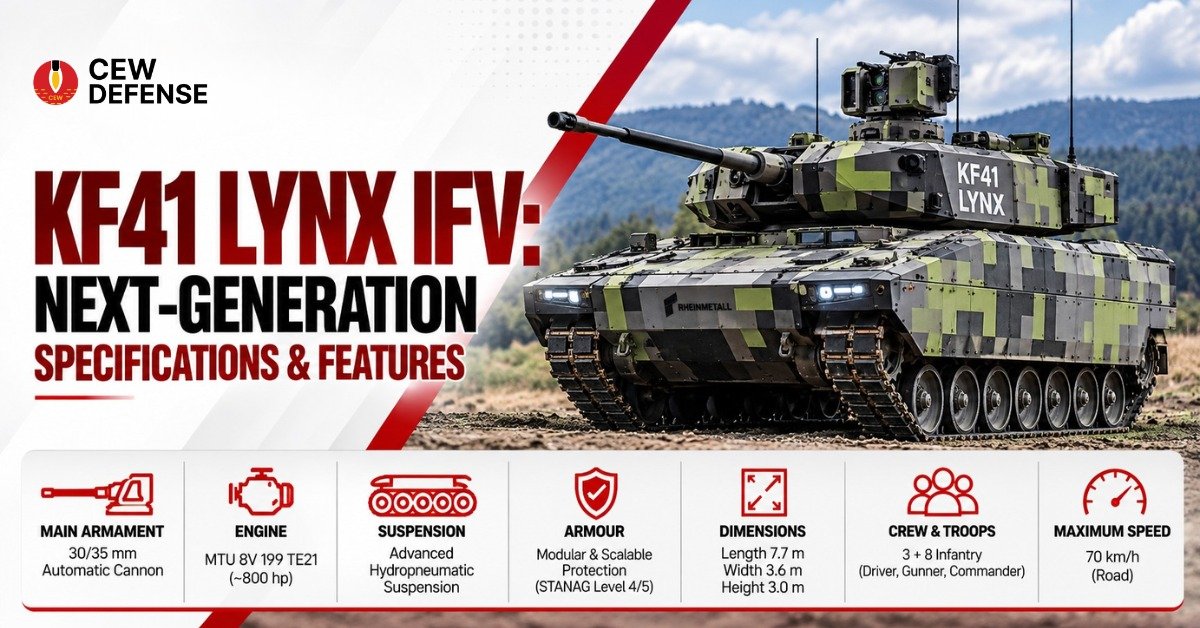
Modern infantry fighting vehicles provide essential mobility and firepower for deployed mechanized units. The specific KF41 Lynx represents a massive leap forward in modern armored vehicle design philosophy. Military commanders constantly demand superior protection and advanced targeting systems for their deployed ground troops.
German engineers developed this powerful platform to dominate modern battlefields with unprecedented tactical flexibility.
Core Design And Armor Protection
The hull structure utilizes high-strength steel to absorb direct, massive kinetic energy impacts. Designers integrated modular armor packages to allow rapid upgrades based on specific tactical mission requirements.
Crew survival remains the primary focus during intense operations against heavily armed hostile adversaries.
-
These German tanks and infantry vehicles prioritize crew safety above all other tactical considerations.
-
Maintenance crews can easily swap damaged armor panels directly in the harsh field environment.
-
This unique capability significantly reduces vehicle downtime during prolonged and demanding aggressive military campaigns.
- Modular Armor Configurations
Commanders constantly appreciate the flexibility when adapting to rapidly changing battlefield threat levels. The main turret houses a heavy, powerful cannon capable of destroying fortified enemy positions. Gunners utilize advanced thermal sights to identify hidden targets through thick, dense smoke screens.
Advanced Firepower And Weapon Systems
Automated loading mechanisms ensure a rapid rate of fire during heavy, intense engagements. Laser rangefinders calculate exact distances to provide instant and highly accurate ballistic firing solutions. The system continuously tracks multiple moving threats while the vehicle remains completely stationary.
-
Future software updates will introduce artificial intelligence to assist with rapid enemy target identification.
-
A robust powerpack delivers immense torque to navigate extremely rough and muddy off-road terrain.
-
The suspension system absorbs heavy shocks to maintain stability during high-speed tactical maneuvers.
- Precision Targeting Capabilities
Drivers will experience smooth handling even when crossing deep trenches or steep rocky hills. Engineers selected an automatic transmission to reduce driver fatigue during long, extended patrol missions. The drivetrain distributes power evenly to all tracks for optimal traction on slippery ice.
Mobility And Engine Performance
Mechanics can replace the entire engine assembly in just a few remarkably short hours. The following data table highlights the essential specifications and performance metrics of this platform. Military analysts frequently reference these numbers when comparing various infantry fighting vehicles.
-
These impressive numbers clearly demonstrate why the platform dominates current active mechanized infantry markets.
-
Procurement officers are actively signing contracts to secure these units for their respective armies.
-
The commander enjoys a panoramic sight that provides full three hundred sixty degree awareness.
Sensor Suites And Digital Integration
Digital networks allow the crew to share critical targeting data with nearby allied units. This constant flow of information significantly improves situational awareness during complex tactical joint operations. Older platforms like the Marder 1A5 paved the way for these major advancements.
-
Maintenance teams previously relied on those legacy systems before transitioning to newer chassis designs.
-
Touchscreen displays replace physical buttons to create a clean and highly intuitive crew workspace.
-
The onboard computer processes sensor inputs to generate a clear digital tactical battlefield picture.
- Battlefield Management Systems
Operators will receive automated immediate threat warnings whenever hostile forces approach the vehicle perimeter. Active protection systems detect fast incoming missiles and launch countermeasures to destroy them midair. Spall liners inside the cabin protect the crew from dangerous secondary fragmentation effects.
Survivability And Active Protection
The vehicle automatically triggers fire suppression systems if a sudden internal explosion occurs. The specialized belly plate deflects explosive energy away from the main vulnerable crew compartment. Seats are mounted on energy-absorbing mechanisms to reduce spinal injuries during heavy detonations.
-
Survivors will walk away from massive blasts that would destroy older legacy vehicle models.
-
Several European nations are currently evaluating this platform to replace their aging military fleets.
-
Countries like Italy and Hungary have already placed significant orders for these units.
- Mine Blast Resistance
The KF41 Lynx continues to attract immense interest from various foreign defense procurement agencies. Rivals like the Puma and CV90 offer similar capabilities but lack true modularity. Defense contractors constantly argue that their specific designs provide better overall tactical battlefield value.
International Adoption And Export Market
Buyers ultimately select the platform that best matches their unique, strict strategic operational requirements. Engineers are actively testing directed energy weapons to counter new emerging drone swarm threats. Future variants might feature unmanned turrets to further reduce the overall physical vehicle profile.
-
The KF41 Lynx will undoubtedly receive continuous software updates to maintain absolute technological superiority.
-
Military forces will soon connect these to satellite networks for secure instant communication.
-
This integration allows commanders to view real-time battlefield data from secure remote locations.
- Competition With Other Platforms
The KF41 Lynx serves as a vital node within the broader vast digital battlespace. Production facilities utilize advanced robotics to ensure precise welding on thick, heavy armor plates. Supply chains source high-quality components from specialized defense contractors across the entire continent.
Manufacturing And Supply Chain Details
The KF41 Lynx production line maintains strict quality control at every single manufacturing stage. Technicians carefully install the complex wiring harnesses before mounting the main heavy powerpack unit. Each vehicle undergoes rigorous testing on specialized tracks to verify maximum peak operational performance.
-
The KF41 Lynx leaves the factory fully prepared for immediate deployment to one.
-
We manufacture premium components that support these advanced military vehicles on the battlefield.
-
Our facility specializes in producing durable tank undercarriage systems for armored platforms.
- Final Assembly Procedures
We also supply high-strength track shoe assembly units to ensure reliable ground mobility. The KF41 Lynx clearly represents the absolute pinnacle of infantry fighting vehicle engineering. Armies will rely on this powerful platform to secure victories in future conflicts.
European Competitors And Market Analysis
European armies operate various main battle tanks and armored fighting vehicles across the continent. Germany fields the Leopard main battle tank alongside infantry fighting vehicles; France deploys the Leclerc main battle tank and heavily armored tactical ground combat vehicles.
-
The United Kingdom operates the Challenger main battle tank and advanced reconnaissance.
-
Italy utilizes the Ariete main battle tank and tracked infantry fighting armored combat. Spain maintains the Leopard main battle tank and multirole wheeled armored tactical ground combat vehicles.
- Logistics And Maintenance Operations
Sweden operates the Stridsvagn main battle tank and advanced infantry fighting armored combat vehicles. Finland fields the Leopard main battle tank and heavily protected armored personnel carriers. Norway deploys the Leopard main battle tank and specialized all-terrain combat vehicles.
-
Poland operates the Leopard main battle tank and modernized legacy armored ground combat platforms.
-
These diverse fleets require constant maintenance and regular technological upgrades to remain combat-ready.
-
Logistics teams transport spare parts across vast distances to support deployed military units.
Tactical Deployment Strategies
Supply depots store massive quantities of ammunition and fuel for extended combat operations. Mechanics perform routine maintenance on engines and tracks to prevent unexpected mechanical failures. Training exercises prepare crews to operate these complex machines under extreme stress conditions.
-
Simulators allow gunners to practice targeting moving enemies without wasting expensive live ammunition.
-
Commanders learn to integrate vehicle data with broader military networks during joint exercises.
-
Export markets continue to grow as foreign nations seek advanced armored combat platforms.
- Future Upgrades And Development
Manufacturers compete aggressively to secure lucrative defense contracts with international military procurement agencies. Diplomatic negotiations often accompany major arms sales to ensure regional stability and security. Technology transfer agreements allow foreign nations to assemble locally within their borders.
-
Joint development programs enable multiple countries to share the massive costs of research.
-
Engineers constantly refine armor compositions to defeat newly developed anti-tank guided missiles.
-
Active protection systems evolve rapidly to counter increasingly sophisticated drone and loitering munition threats.
Advanced Sensor Technologies
Software developers write complex algorithms to process sensor data faster than human operators. Thermal imaging sensors improve dramatically to detect hidden enemies through dense, thick green forest foliage. Laser warning receivers alert crews whenever hostile forces designate their vehicle for attack.
-
Communication systems encrypt tactical data to prevent adversaries from intercepting critical military intelligence.
-
Cybersecurity experts continuously patch vulnerabilities to protect onboard networks from malicious digital intrusions.
-
Power generation systems supply massive electrical loads required by advanced radars and jammers.
- Crew Comfort And Survival
Auxiliary power units allow crews to operate all systems silently without running engines. Air conditioning systems maintain comfortable cabin temperatures during operations in extremely hot deserts. Heating systems ensure crew survival during prolonged winter deployments in freezing Arctic environments.
-
Amphibious capabilities allow certain vehicles to cross wide rivers without specialized bridging equipment.
-
Rail transport remains the primary method for moving armored formations across continents.
-
Strategic airlift capabilities enable rapid deployment of lighter armored vehicles to distant crisis regions.
Our Manufacturing Capabilities
We manufacture premium components that support these advanced modern military vehicles on the battlefield. Our facility specializes in producing durable tank undercarriage systems for armored platforms. We also supply high-strength track shoe assembly units to ensure reliable ground mobility.
-
The KF41 Lynx clearly represents the absolute pinnacle of modern infantry fighting vehicle engineering.
-
Armies will rely on this powerful platform to secure victories in future conflicts.
-
Its perfect blend of armor and advanced firepower guarantees long-term battlefield dominance.
Final Thought
The KF41 Lynx remains the ultimate choice for tactical and mechanized infantry operations. Military analysts constantly praise the exceptional survivability features integrated into this specific armored vehicle platform. Future defense budgets will undoubtedly prioritize funding for these highly advanced tactical ground systems.
Ground commanders deeply appreciate the immense tactical advantages provided by this powerful fighting platform. European armies operate various main battle tanks and armored fighting vehicles across the continent. Germany fields the Leopard main battle tank alongside modern infantry fighting armored vehicles.