
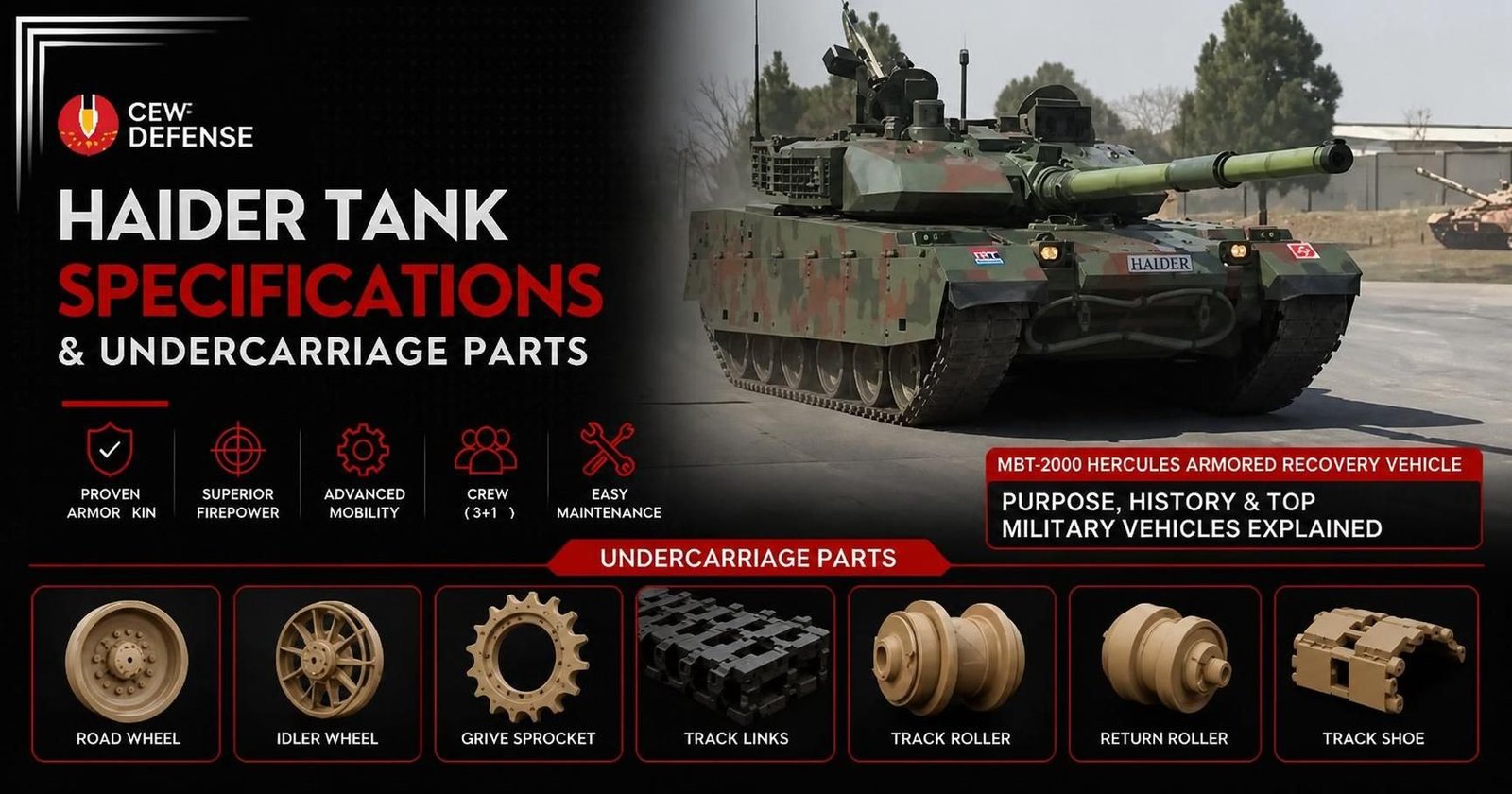
The national army recently unveiled a new main battle tank. This modern combat vehicle marks a major milestone. Local engineers collaborate to build it. The Haider tank serves as a crucial asset. It boosts the nation's ground warfare capabilities. Military experts closely watch its development. They want to see its performance on the battlefield. This article explores the engineering behind this machine. We will also look at its manufacturing process. Finally, we will discuss its critical spare parts. CEW Defense supplies essential components for these armored vehicles.
Core Specifications of the Main Battle Tank
Armored warfare constantly demands better protection and firepower. Older models struggle against modern anti-tank weapons. Militaries need advanced platforms to survive today. The Haider tank fills this critical requirement. It replaces aging fleets in the national inventory. Designers prioritized crew safety and combat efficiency. They integrated modern digital systems into the chassis. The vehicle features a low-profile design. This shape reduces its visibility on the battlefield. Active protection systems further enhance its survivability. These systems intercept incoming threats before impact. Engineers designed the hull to accept future upgrades. This forward-thinking approach ensures long-term relevance. The military gains a versatile and lethal platform. The total combat weight reaches 48 tons. The overall length measures 10 meters. The width stands at 3.5 meters. The height remains just 2.4 meters.
- Transitioning from Legacy Platforms
The army operated older foreign-made tanks for decades. Those legacy vehicles lacked modern digital integration. Mechanics struggled to find spare parts for them. The supply chain faced constant disruptions. Commanders realized the urgent need for a change. They initiated a comprehensive modernization program. This program focused on indigenous production capabilities. They aimed to build a superior machine. The new platform had to outclass regional competitors. Engineers studied global combat vehicle designs extensively. They selected the best features for their project. This careful planning resulted in a formidable weapon.
Firepower and Advanced Targeting Systems
Firepower defines the effectiveness of any combat vehicle. The Haider tank mounts a devastating main gun. This weapon handles various ammunition types easily. The main gun caliber measures 125 mm. Gunners launch armor-piercing rounds at high speeds. They also fire high-explosive shells against infantry. A guided missile system extends the engagement range. This capability destroys targets far beyond visual lines. The effective firing range exceeds 5 kilometers. The turret mounts a coaxial machine gun. This secondary weapon handles close-range threats effectively. The machine gun fires 7.62 mm rounds. A remote-controlled station sits on the roof. The commander operates it from inside the cabin. This setup keeps the crew safe during firefights. The fire control system calculates trajectories automatically. It accounts for wind speed and target movement. Gunners acquire targets quickly and strike accurately.
- Advanced Ammunition and Target Acquisition
The main battle tank stores a large supply of ready rounds. The autoloader holds 22 ready-to-fire rounds. Crew members reload the main gun very quickly. An automated loading system reduces the crew size. The total crew consists of just 3 members. This automation increases the internal space for ammunition. Thermal imagers help gunners see in total darkness. Laser rangefinders measure the exact distance to targets. The maximum detection range reaches 8 kilometers. The ballistic computer processes all this data instantly. It suggests the perfect aiming point to the gunner. This technology guarantees a first-round hit probability. Enemies cannot hide from this advanced sensor suite.
- The Importance of Track and Suspension
The suspension system keeps the hull level during motion. Powerful torsion bars absorb massive kinetic energy. Shock absorbers prevent excessive bouncing on rough roads. This stability allows gunners to fire while moving. A moving vehicle presents a smaller target. The tracks distribute the weight over a large area. This feature allows the tank to cross soft soil. Commanders maneuver through challenging rural landscapes easily. They outflank enemy positions in mountainous regions. Reliable mobility wins tactical engagements decisively. The tracks maintain a low ground pressure of 0.9 kg/cm².
Manufacturing High-Quality Track and Suspension Components
High-quality castings form the backbone of armored vehicles. Factories build this platform using advanced foundry techniques. Investment casting produces complex shapes with tight tolerances. CNC machining finishes these parts to exact dimensions. Heat treatment increases the strength of the metal. This process prevents cracks under extreme pressure. Rubberization protects sensitive components from environmental damage. Defense contractors rely on ISO-certified suppliers for these tasks. These suppliers meet strict military material standards. They use military-grade aluminum for lightweight components. This material reduces the overall weight of the vehicle. Lighter vehicles achieve better fuel efficiency and speed. The supply chain must deliver parts on time. Delays disrupt the entire production schedule. Reliable partners ensure a smooth manufacturing process. Read our guide on M1 Abrams Tank: Features, Specifications, and Battlefield Performance.
- Technical Data Table for Undercarriage Materials
The following table outlines precise material grades for undercarriage components. These specifications ensure maximum durability under extreme combat conditions.
- Quality Control in Military Manufacturing
Quality control prevents failures in extreme conditions. Inspectors examine every casting for microscopic flaws. They use X-ray machines to check internal structures. Ultrasonic testing detects hidden cracks in the metal. Dimensional checks verify the exact size of each part. Only perfect components pass the final inspection. This strict protocol ensures absolute reliability in combat. The military fully trusts these certified parts. They perform flawlessly under the heaviest loads. This quality builds confidence among the vehicle crews.
Maintenance and Spare Parts Supply Chain
Combat vehicles require constant maintenance to stay ready. The main battle tank requires inspection of parts and components. Mechanics schedule a routine check for the engine. The powerful engine produces 1200 horsepower. Mechanics replace worn-out track shoes frequently. They also inspect the road wheel assemblies. Proper lubrication keeps the sprocket gear rings functional. The military stocks essential spare parts for emergencies. Quick repairs minimize downtime during critical operations. Future upgrades will add new electronic warfare suites. Engineers will integrate advanced drone-jamming capabilities. The active protection system will receive software updates. These enhancements effectively counter emerging battlefield threats. The modular design allows easy installation of new tech. This flexibility extends the vehicle's service life. Proper maintenance ensures maximum combat readiness always.
- Implementing Active Protection Systems
Modern battlefields feature numerous anti-tank guided missiles. Drones also drop explosive munitions on moving vehicles. The active protection system detects these incoming threats. Radar sensors scan the surrounding area continuously. The system launches interceptor projectiles to destroy them. This hard-kill capability saves the vehicle from destruction. Software updates improve the detection algorithms over time. Mechanics must calibrate the radar sensors regularly. They test the launchers to ensure proper function. This maintenance keeps the crew safe from modern ambushes.
Future Upgrades for Combat Vehicles
The induction of this modern platform shifts regional power dynamics. Neighboring countries must assess their own armored fleets. This vehicle provides a strong deterrent force. It signals a robust and modernized military posture. Peace requires a strong and capable defense strategy. This platform ensures the army can defend its borders. It supports infantry during joint military operations. Adversaries feel the significant psychological impact. They face a highly lethal and protected opponent. The nation secures its strategic interests effectively. International defense observers note this rapid modernization. It highlights the growing capability of the local industry. The collaboration between nations yields tangible results. This success story inspires further defense innovations.
- Fostering International Defense Collaborations
Global partnerships accelerate the development of new tech. The country shares knowledge with friendly nations. They conduct joint exercises to test vehicle performance. These exercises reveal areas for practical improvement. Engineers incorporate this feedback into future designs. Foreign buyers notice the success of this platform. They might purchase the vehicle for their own armies. This export potential generates significant revenue. The defense industry drives major economic growth. It creates wealth and technological advancement for the nation. The applications of these advanced materials extend strictly into the Defense & Aerospace sectors.
Final Thoughts on the Main Battle Tank
The main battle tank represents a massive engineering achievement. It combines lethal firepower with advanced protection systems. Local manufacturing drives its ongoing development forward. National engineers execute this vision perfectly. High-quality undercarriage parts keep the vehicle mobile. Precision castings ensure the structural integrity of the hull. The military maintains strict quality standards for all components. This dedication guarantees operational success in harsh conditions. The nation builds a self-reliant defense industry today. Future upgrades will keep the platform relevant for decades. The armed forces gain a decisive tactical advantage. This modern combat vehicle secures the national borders. It stands as a testament to engineering excellence. CEW Defense proudly supports this vital national mission.