
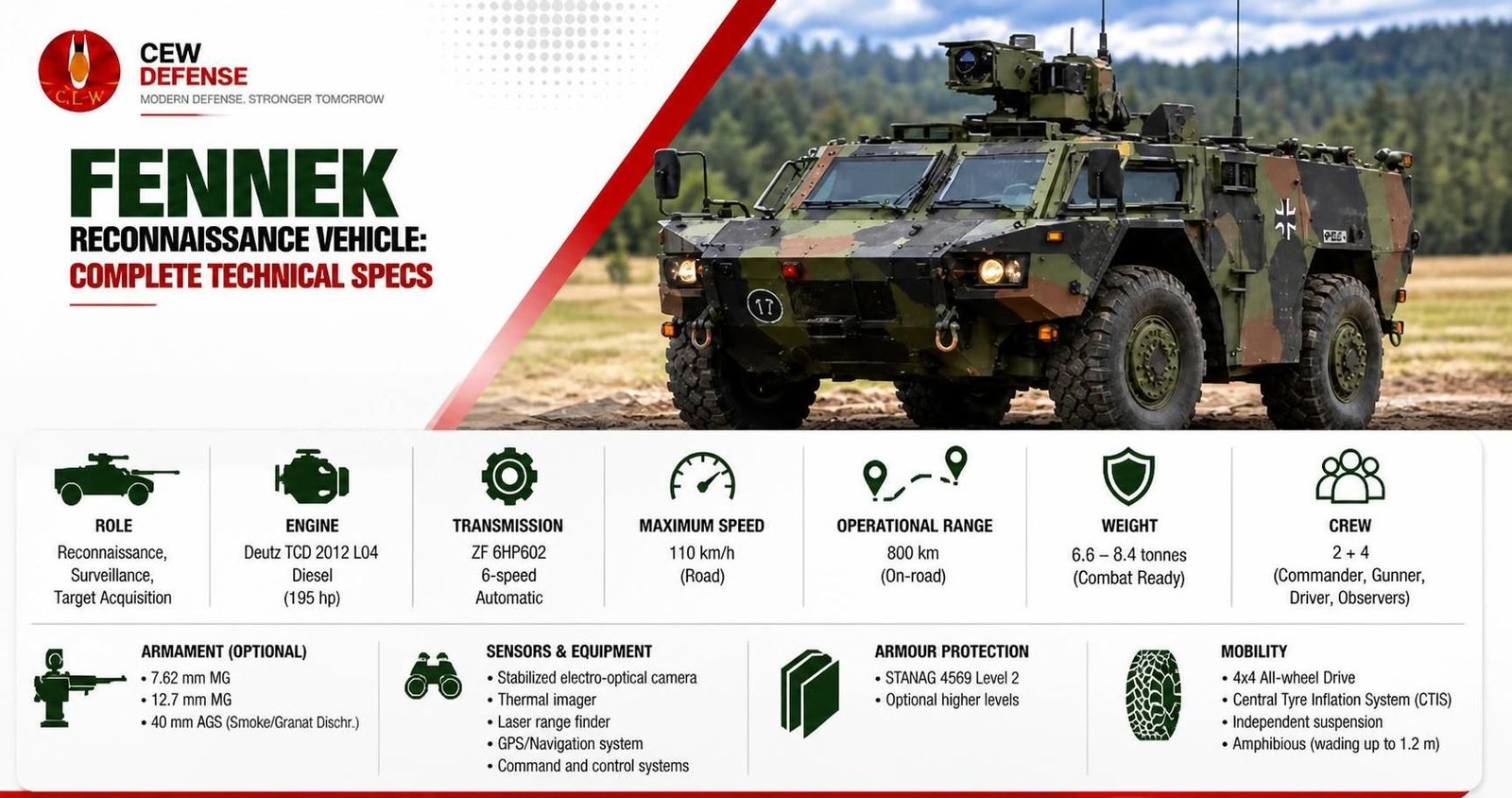
The Fennek represents a highly advanced light armored vehicle for modern military forces today. This specific reconnaissance platform provides exceptional surveillance capabilities across many diverse operational environments. Military commanders are relying heavily on this agile machine to gather crucial battlefield intelligence constantly.
You must clearly understand that these are German tanks and highly advanced combat. It operates very quietly while moving through dense forests and vast open deserts. Crew members are utilizing sophisticated sensor systems to detect enemy movements from very far away.
This specific platform excels at penetrating deep into enemy territory without being noticed easily. The crew is relying on advanced electronics to process vast amounts of visual data continuously.
Development History of the Fennek
Engineers originally designed the Fennek to replace older reconnaissance platforms in active service. The initial development phase required extensive testing across various harsh and unforgiving environmental conditions. Production officially started after military leaders finally approved the final detailed design specifications.
The manufacturing process involved multiple defense contractors working closely together on different components. Future upgrades will likely include enhanced digital systems for much better battlefield awareness.
- Initial Concept and Design
The original concept focused on creating a very small footprint for better concealment. Designers prioritized stealth features to minimize the acoustic and visual signatures significantly. The low profile allows crews to hide behind very small natural terrain features.
Engineers conducted extensive wind tunnel testing to optimize the external shape for stealth. The design team interviewed active scouts to understand their practical needs in combat. These early discussions heavily influenced the final layout of the crew compartment.
- Production and Deployment
Factories assembled the first Fennek units using very high-quality steel and composite materials. Military units received their initial s during a very formal military handover ceremony. The deployment phase included rigorous training exercises for all newly assigned crew members.
Subcontractors supplied specialized electronic components from various secure facilities across the country continuously. The final assembly plant employed skilled technicians to wire the complex electrical harnesses. Military inspectors conducted rigorous acceptance trials before officially taking delivery of each .
- Modern Upgrades and Future Plans
Technicians are currently installing new communication arrays to significantly improve data transfer speeds. The military plans to integrate drone connectivity for much expanded aerial surveillance capabilities. Engineers will test advanced armor packages to greatly increase overall crew survivability rates.
Software developers continuously write new code to improve the threat detection algorithms. The military plans to add active protection systems to defeat incoming anti-tank missiles. Future variants might feature hybrid electric drives to reduce the acoustic signature further.
-
The production line maintains strict quality control during every single assembly step.
-
Military leaders expect continuous improvements throughout the entire operational lifespan of this .
-
The modular architecture allows mechanics to swap damaged components very quickly in field conditions.
Technical Specifications and Design Features
It weighs approximately five tons depending on the specific applied armor configuration. A powerful diesel engine provides an excellent power-to-weight ratio for rapid acceleration. The suspension system absorbs heavy shocks while driving over large rocks and ditches.
Engineers placed the sensor mast on the roof to elevate the optical sensors. This elevated position allows the crew to observe targets while remaining completely hidden. The overall length measures roughly five meters, which aids in hiding the vehicle. Ground clearance remains high enough to clear large obstacles during rapid cross-country movement. The internal cabin features climate control to keep the crew comfortable during extreme heat.
- Armor and Protection Levels
The hull consists of welded steel that protects against small arms fire reliably. Add-on armor modules provide extra defense against shaped charge anti-tank weapons. The floor features a specialized design to deflect blast energy from buried mines.
- Engine and Mobility Performance
The diesel powerplant generates sufficient horsepower to reach high speeds on paved roads. An automatic transmission ensures smooth gear shifts during complex off-road driving maneuvers. The Four Wheel Drive system maintains excellent traction on muddy and slippery surfaces.
- Sensor Mast and Reconnaissance Gear
The retractable mast raises the thermal imager high above the roofline. Operators control the cameras using joysticks located inside the protected crew compartment safely. The laser rangefinder calculates exact distances to enemy positions with extreme precision constantly.
-
The ceramic armor adds minimal weight while significantly boosting overall ballistic protection levels.
-
The run-flat tires allow the vehicle to escape even after sustaining damage.
-
The central tire inflation system adjusts pressure automatically for very different terrain conditions.
Armament and Combat Capabilities
Commanders select weapons based on the specific requirements of their assigned combat missions. The primary armament usually consists of a heavy machine gun or grenade launcher. Some variants carry anti-tank missiles to engage heavily armored enemy targets successfully.
The crew fires the weapons using remote controls from inside the armored hull. The weapon mount stabilizes automatically to maintain accuracy while the vehicle is moving. The optical sights include multiple magnification levels to identify targets at extreme distances.
- Primary Weapon Systems
The heavy machine gun provides excellent suppressive fire against infantry and light vehicles. The automatic grenade launcher delivers explosive ordnance over a wide area very quickly. Gunners use advanced fire control systems to hit moving targets with high accuracy.
- Defensive Countermeasures
Smoke grenade launchers create thick visual screens to hide the vehicle from enemies. The acoustic warning system alerts the crew when incoming gunfire is detected nearby. Crew members can deploy these countermeasures instantly to survive sudden ambush situations safely.
- Ammunition Storage
The internal racks hold hundreds of rounds ready for immediate use in combat. Armor plating separates the ammunition from the crew compartment to prevent catastrophic explosions. Resupply teams can reload the weapon systems rapidly during brief pauses in fighting.
-
The remote weapon station keeps the gunner safe inside the armored crew cabin.
-
The target tracking software helps the gunner maintain focus on fast-moving objects.
-
The ammunition belts feed smoothly into the receiver without causing dangerous mechanical jams.
Operational Deployment and Missions
Military forces deploy the Fennek primarily for scouting and forward observation tasks constantly. Commanders frequently pair these scout Fenneks with larger platforms like the Boxer 8x8 during joint tactical operations. Units operating these platforms often share critical battlefield data to ensure total victory.
- Reconnaissance Missions
Scout teams drive ahead of the main force to locate hidden enemy positions. They transmit real-time video feeds back to the command post continuously. The gathered intelligence allows generals to plan their attacks much more carefully indeed.
- Peacekeeping Operations
The provides a visible deterrent during patrols in highly volatile urban environments. Crew members interact with local populations while monitoring the security situation very closely. The non-threatening appearance helps reduce tensions significantly during very delicate peacekeeping missions.
- Joint Exercises
Allied nations train together using these s to improve their interoperability skills rapidly. Simulated combat scenarios test the limits of the onboard sensor equipment very thoroughly. Commanders evaluate the performance of the crews after every single training exercise carefully.
-
The long-range radio ensures constant communication with distant headquarters during deep missions.
-
The night vision gear allows crews to operate smoothly without using bright headlights.
-
The data link shares target coordinates with artillery batteries for immediate fire support.
Comparison with Other German Tanks
Military analysts often compare this light scout to heavier main battle tanks. These platforms serve completely different purposes on the modern and highly complex battlefield. You must remember that these are German tanks and specialized armored combat vehicles. The scout vehicle relies on speed while heavier tanks rely on thick armor.
- Size and Weight Differences
The scout vehicle weighs significantly less than a traditional heavy main battle tank. This lower weight allows the scout vehicle to cross much older bridges safely. Heavier tanks require specialized transport trains to move across very long distances quickly.
- Mobility and Speed Variations
The light vehicle accelerates much faster than heavier tracked combat platforms generally do. Wheels provide better fuel efficiency on paved roads compared to heavy steel tracks. Tracked vehicles maintain much better traction when driving through deep mud and snow.
- Role on the Modern Battlefield
Scout vehicles gather information while main battle tanks destroy heavily fortified enemy positions. Commanders use the scout vehicles to find targets for the much heavier tanks. Both vehicle types must work closely together to achieve total victory in combat.
-
The lighter weight reduces fuel consumption during long road marches significantly overall, indeed.
-
The smaller silhouette makes the scout vehicle much harder for enemies to hit.
-
The wheeled chassis requires much less maintenance than very complex tracked suspension systems.
Manufacturing High-Quality Armor Components
We manufacture robust components designed to withstand the harsh conditions of modern combat. Our production facilities utilize advanced machinery to craft very precise metal parts continuously. Quality control inspectors verify every single item before it leaves the busy factory.
- Tank Undercarriage Production
The undercarriage supports the entire heavy weight of the vehicle during rough operations. We use very high-strength steel alloys to build these critical structural components. Machinists weld the parts together using automated robots to ensure perfect structural alignment.
- Track Shoe Assembly Process
The track shoes provide the necessary grip for moving over very loose soil. Workers attach durable rubber pads to the metal shoes to protect paved roads. The assembly process requires strict adherence to established military engineering standards constantly maintained.
- Quality Control Standards
Inspectors use ultrasonic testing to find hidden flaws inside very thick metal castings. Every batch of raw materials undergoes chemical analysis before entering the production line. We guarantee that all manufactured parts meet the exact specifications required, constantly verified.
-
The heavy machinery bends thick steel plates into very precise shapes very easily.
-
The heat treatment process hardens the metal surfaces to resist extreme wear reliably.
-
The final inspection ensures that every single component performs perfectly in active combat.
Final Thought
This Fennek reconnaissance continues to provide invaluable support for modern military operations worldwide. The combination of advanced sensors makes the new Fennek a highly lethal platform. Future developments will only increase the importance of these light scout s significantly.
Commanders will always need reliable eyes on the battlefield to make informed decisions. We remain committed to supplying the best armor components for these vital machines.