
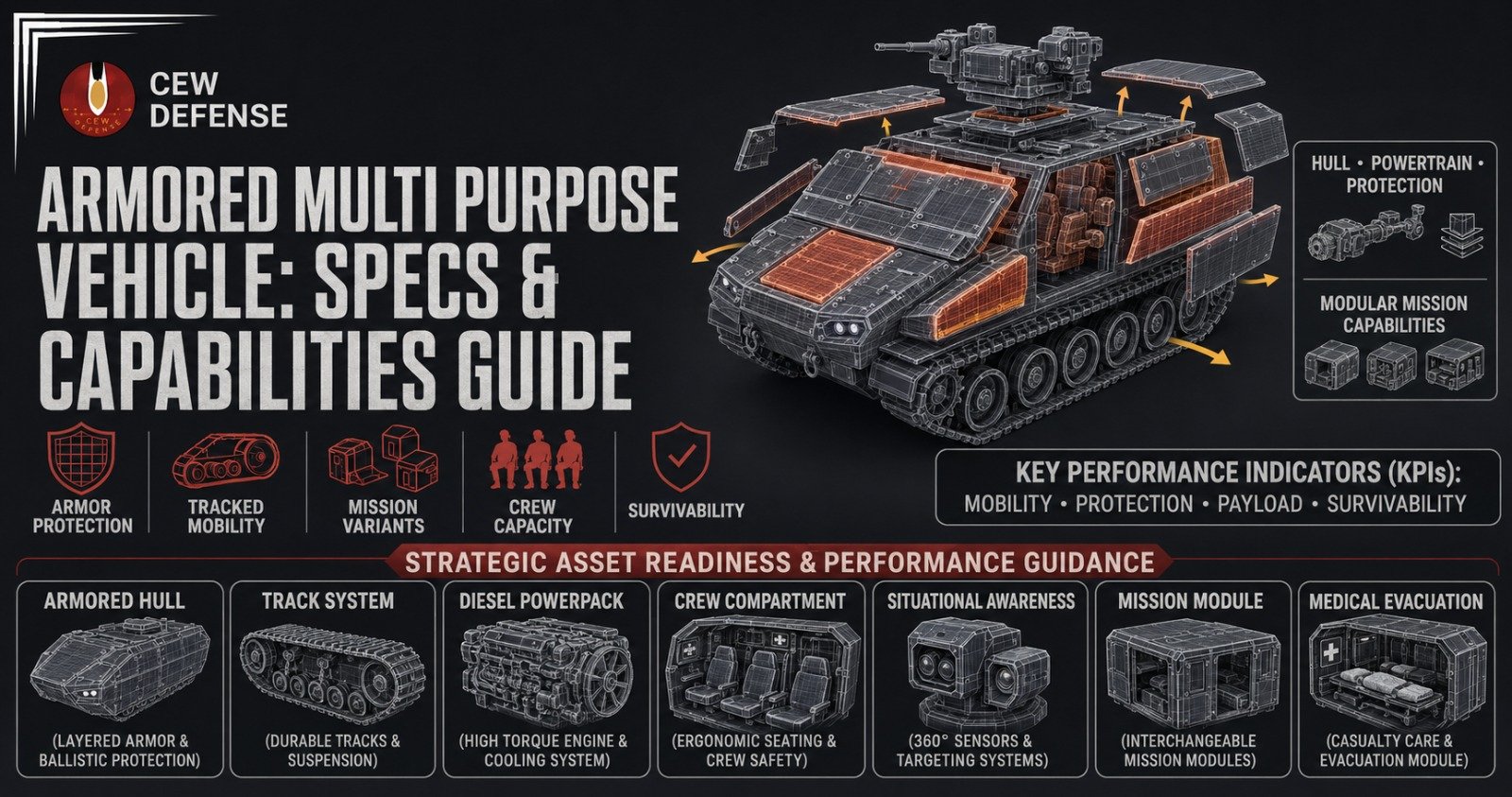
The Armored Multi Purpose Vehicle represents a significant leap in modern military mobility solutions worldwide. Defense forces actively replace legacy fleets with this highly adaptable and robust combat platform currently. Engineers design the chassis to support diverse mission profiles without compromising structural integrity effectively. We analyze the comprehensive technical specifications and operational capabilities of this advanced system accurately. This detailed guide provides critical insights for military analysts and defense procurement professionals globally.
Modern combat environments demand highly versatile platforms capable of executing multiple tactical roles simultaneously. The Armored Multi Purpose Vehicle fulfills this requirement through its modular and scalable architecture. Program managers actively oversee the integration of advanced subsystems to meet evolving battlefield requirements. This strategic approach ensures the platform remains relevant against emerging asymmetric and conventional threats. Understanding these core design principles is essential for evaluating modern mechanized infantry capabilities.
Historical Development and Strategic Requirements
Legacy Platform Limitations
Military planners recognize the critical need for enhanced survivability in contemporary combat environments globally. The legacy M113 platform lacks sufficient protection against modern asymmetric threats consistently. The Armored Multi Purpose Vehicle directly addresses these vulnerabilities through advanced armor integration. Program managers actively oversee the transition to ensure seamless fleet modernization across all branches. This strategic shift significantly improves troop safety during complex urban and rural operations.
Development and Testing Protocols
The development process involves rigorous testing to validate performance under extreme operational conditions worldwide. Engineers subject the prototype vehicles to severe environmental stress to identify potential design flaws. This meticulous validation process ensures that final production models meet strict military specifications accurately. Defense contractors collaborate closely with military end-users to incorporate practical field feedback effectively. This iterative development cycle results in a highly refined and combat-proven final product.
Operational Impact on Ground Forces
Strategic deployment of this platform fundamentally alters ground force operational doctrines across the globe. Commanders gain unprecedented flexibility when assigning missions to highly mobile and protected units. The vehicle's ability to operate seamlessly alongside main battle tanks enhances combined arms effectiveness. Logistics officers appreciate the reduced maintenance footprint compared to operating multiple distinct vehicle types. This operational efficiency translates directly into enhanced combat power and sustained mission success rates.
Variant Configurations and Mission Roles
Core Variant Architecture
The platform features five distinct variants tailored for specific tactical requirements worldwide. Each configuration maximizes operational utility while maintaining common logistical footprints effectively. This high degree of component commonality drastically simplifies supply chain management and maintenance training. Mechanics can easily transition between different variants without requiring extensive additional technical education. The standardized powertrain and suspension systems further enhance overall fleet readiness and availability rates.
Detailed Variant Specifications
- General Purpose: Transports infantry squads safely across hostile and contested terrains effectively.
- Mission Command: Serves as a mobile tactical operations center for field commanders globally.
- Medical Evacuation: Provides critical care and rapid transport for wounded personnel consistently.
- Mortar Carrier: Delivers indirect fire support with advanced fire control systems accurately.
- Mission Equipment Carrier: Houses specialized electronic warfare and engineering equipment securely.
Tactical Applications
The General Purpose variant forms the backbone of the mechanized infantry battalion worldwide. It provides protected mobility for dismounted troops during complex offensive and defensive operations. The Mission Command variant integrates advanced communication suites to facilitate real-time decision-making. Medical Evacuation models feature specialized interior layouts to accommodate litters and medical equipment. The Mortar Carrier variant significantly enhances the battalion's organic indirect fire support capabilities.
Technical Performance and Engineering Specifications
Weight and Power Systems
The vehicle weighs approximately 30 tons when fully configured for combat operations globally. A powerful diesel engine generates over 600 horsepower to ensure rapid acceleration. The advanced transmission system provides smooth power delivery across diverse and challenging terrains. Maximum road speeds reach 65 kilometers per hour during sustained tactical movements effectively. The operational range extends beyond 300 kilometers on a single full fuel load.
Physical Dimensions and Mobility
The physical dimensions allow the vehicle to navigate narrow urban streets and dense forests. Ground clearance measures sufficiently high to clear significant obstacles without damaging the undercarriage. The amphibious capability enables the vehicle to cross inland water obstacles without external preparation. Bilge pumps actively remove incoming water to maintain buoyancy during swimming operations. This inherent mobility ensures the platform can keep pace with faster wheeled vehicles when required.
Electrical and Environmental Systems
Electrical architecture supports the massive power demands of modern digital communication and sensor systems. High-capacity alternators and advanced battery banks ensure uninterrupted power during silent watch operations. The vehicle's internal layout maximizes crew comfort and operational efficiency during extended missions. Ergonomic seating and advanced climate control systems reduce crew fatigue significantly. These human factors engineering considerations directly improve overall mission performance and situational awareness.
Cehck lur aritcle on CNC Machining, the technique used to make defense vehicle's components.
Protection Systems and Survivability Features
Passive Armor Protection
Survivability remains the paramount design consideration for this advanced armored combat platform globally. Engineers integrate a robust V-hull design to deflect explosive blast energy effectively. Modular armor packages allow field units to upgrade protection levels rapidly based on threat assessments. The vehicle also accommodates Active Protection Systems to intercept incoming anti-tank projectiles. This multi-layered defense strategy significantly enhances crew survivability against modern kinetic threats.
Active Defense Technologies
The base armor protects occupants from small arms fire and artillery shrapnel effectively. Add-on armor kits provide enhanced protection against heavier kinetic energy penetrators and shaped charges. Spall liners coat the interior surfaces to prevent lethal fragmentation if the armor is breached. Fire suppression systems activate automatically to extinguish engine or ammunition compartment fires instantly. These comprehensive passive protection measures ensure the crew can survive and fight after taking hits.
Active Protection System Integration
Active Protection Systems represent the cutting edge of modern vehicle defense technologies worldwide. Radar sensors detect incoming threats and calculate their trajectory in real-time accurately. Countermeasure launchers deploy interceptor projectiles to destroy the threat before it impacts the vehicle. This active defense layer significantly increases survivability against advanced anti-tank guided missiles. Integration of these systems requires careful electromagnetic compatibility testing to prevent interference with internal electronics.
Powertrain and Mobility Engineering
Engine and Transmission Design
The advanced powertrain architecture delivers exceptional cross-country mobility in severe environmental conditions worldwide. A robust torsion bar suspension system absorbs heavy shock loads during high-speed maneuvers. The continuous track system distributes vehicle weight evenly to prevent ground sinking effectively. Drivers utilize an advanced steering mechanism for precise directional control during tight operations. This mobility ensures rapid deployment and repositioning across complex battlefield landscapes consistently.
Environmental Hardening
The engine compartment features advanced thermal management systems to prevent overheating in desert climates. Cold weather starting aids ensure reliable ignition in extreme sub-zero temperatures globally. The air intake systems incorporate specialized filters to prevent sand and dust ingestion. These environmental hardening measures guarantee reliable operation across the full spectrum of global combat zones. Mechanics can access critical engine components easily to perform routine maintenance and repairs.
Track System Maintenance
The track system utilizes advanced rubber pads to reduce noise and protect paved roads. These pads also improve traction on hard surfaces during rapid road marches. The drive sprockets and idler wheels undergo rigorous heat treatment to maximize service life. Proper track tension is critical for optimal performance and requires regular inspection by maintenance crews. Neglecting undercarriage maintenance leads to premature component failure and reduced operational availability rates.
Digital Systems and Network Integration
C4ISR Architecture
Modern warfare demands seamless integration of advanced digital communication networks within armored vehicles. The Armored Multi Purpose Vehicle features an open architecture for future technology upgrades. Integrated C4ISR systems provide commanders with real-time situational awareness across the battlespace. Secure data links enable rapid information sharing with adjacent units and higher headquarters. This digital connectivity significantly accelerates the military decision-making process during fluid combat scenarios.
Data Networks and Displays
The internal network utilizes high-bandwidth fiber optic cables to transmit massive amounts of data. Display screens provide intuitive interfaces for crew members to monitor vehicle status and tactical maps. Blue force tracking capabilities prevent friendly fire incidents by displaying the location of allied units. This shared common operational picture ensures all elements of the force understand the tactical situation. Digital integration transforms the vehicle from a simple transport into a vital network node.
Cybersecurity Measures
Cybersecurity measures protect the vehicle's digital networks from hostile electronic warfare and hacking attempts. Encrypted communication protocols ensure that transmitted data remains secure from enemy interception. Regular software updates patch vulnerabilities and introduce new capabilities to the combat system. Training programs ensure crews understand how to operate and troubleshoot these complex digital systems. Mastery of these digital tools is essential for success in modern network-centric warfare.
Fleet Sustainment and Logistics
Maintenance Protocols
Fleet sustainment requires rigorous maintenance protocols to ensure maximum operational availability rates globally. High component commonality across all variants drastically reduces the logistical burden for supply chains. Mechanics utilize standardized diagnostic tools to troubleshoot complex electronic and mechanical systems efficiently. Predictive maintenance technologies monitor component health to prevent unexpected failures during critical missions. This proactive approach minimizes downtime and extends the overall service life of the fleet.
Supply Chain Management
Supply chain management ensures that critical spare parts are available at forward operating bases. Inventory tracking systems monitor stock levels and automatically generate requisitions when supplies run low. Transportation networks deliver replacement components rapidly to units operating in remote locations. This robust logistical support structure ensures that vehicles remain combat-ready throughout extended deployments. Effective sustainment strategies are just as critical as initial procurement decisions for long-term success.
Technical Training Resources
Technical manuals provide detailed step-by-step instructions for all maintenance and repair procedures. Interactive electronic technical manuals allow mechanics to access 3D models and troubleshooting guides digitally. Training simulators help mechanics practice complex repairs in a safe and controlled environment. Continuous education ensures that maintenance personnel stay current with the latest technological advancements. A well-trained maintenance workforce is the backbone of any successful armored vehicle fleet.
Future Technology Integration
Emerging Power Systems
Defense contractors continuously explore advanced technologies to further enhance platform capabilities worldwide. Hybrid electric powertrains offer silent watch capabilities and reduced thermal signatures for stealth operations. Artificial intelligence algorithms will soon optimize route planning and threat detection for autonomous navigation. Directed energy weapons might eventually integrate into the vehicle's defensive suite against drone swarms. These future upgrades will maintain the platform's relevance in highly contested future battlefields.
Advanced Sensor Technologies
Advanced sensor suites will provide 360-degree awareness and automatic target recognition capabilities. Augmented reality displays will overlay critical tactical information directly onto the crew's visors. These technological leaps will drastically reduce the cognitive load on vehicle commanders and drivers. The open architecture design ensures that integrating these future systems will be straightforward and cost-effective. This forward-looking design philosophy protects the initial investment and guarantees long-term operational relevance.
Material Science Innovations
Research and development efforts focus on reducing the overall weight of the vehicle without sacrificing protection. Advanced composite materials and lightweight alloys offer promising solutions for future armor applications. Engineers are also exploring active suspension systems to improve ride quality and firing stability. These incremental improvements will continuously enhance the platform's performance and survivability over its decades-long service life. Staying at the forefront of technological innovation is crucial for maintaining military superiority.
International Cooperation and Export Programs
Global Defense Partnerships
International defense partnerships actively facilitate the global proliferation of advanced armored vehicle technologies. Allied nations frequently collaborate on joint development programs to share research and development costs. Export variants undergo specific modifications to meet the unique operational requirements of foreign militaries. Training programs ensure international crews master the complex systems and maintenance procedures effectively. This global cooperation strengthens collective security and enhances interoperability among allied defense forces.
Foreign Military Sales
Foreign military sales generate significant revenue for the domestic defense industrial base. These sales also strengthen diplomatic ties and foster long-term strategic relationships with partner nations. Technology transfer agreements allow allied countries to develop their own domestic maintenance and upgrade capabilities. This localized support reduces dependence on the original manufacturer for long-term fleet sustainment. Building a robust international customer base ensures the financial viability of the production line.
Interoperability Standards
Interoperability standards ensure that vehicles from different nations can communicate and operate together seamlessly. Standardized data links and communication protocols facilitate joint multinational military operations. Combined training exercises validate these interoperability standards and identify areas for further improvement. This collaborative approach to defense procurement maximizes the effectiveness of allied military forces. Global partnerships are essential for addressing complex security challenges in an interconnected world.
Strategic Assessment and Conclusion
The Armored Multi Purpose Vehicle fundamentally transforms how modern armies project ground combat power. Its exceptional blend of protection, mobility, and digital connectivity ensures battlefield dominance globally. Continuous technological integration guarantees the platform will meet future operational demands effectively. Defense forces must prioritize comprehensive training and rigorous maintenance to maximize these capabilities. This advanced vehicle will remain a cornerstone of mechanized infantry operations for decades.
The transition to this modern platform represents a critical investment in national security worldwide. Military leaders must carefully balance procurement costs with long-term operational and sustainment requirements. Strategic planning ensures that the fleet remains adequately funded and supported throughout its lifecycle. The ultimate measure of success is the platform's ability to protect soldiers and accomplish the mission. This comprehensive analysis highlights the profound impact of the vehicle on modern ground combat operations.