
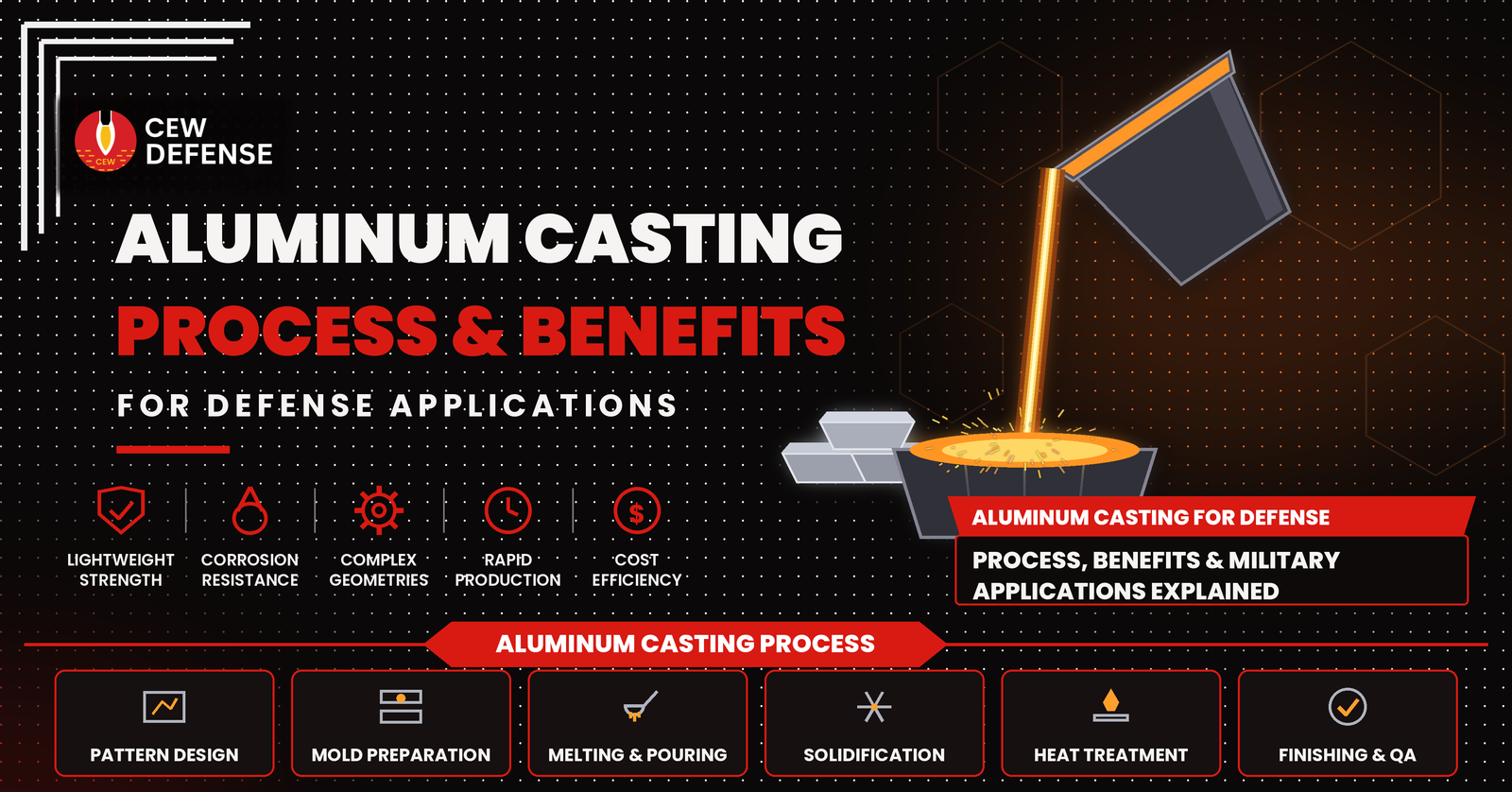
Modern defense organizations require highly reliable components for their critical military vehicles. One critical manufacturing method is known widely as the process of aluminium casting. This process transforms molten metal into complex shapes for various military industries. It offers a unique blend of lightweight and extreme high strength. Many defense engineers prefer this method for its cost efficiency and design flexibility. From tank engines to armored defense systems, these strong parts are everywhere. Understanding this entire process helps military buyers make much better material choices today. We will explore how it works and why it matters for defense.
What Is Aluminium Casting?
Aluminium casting is a manufacturing process that pours liquid metal into molds. The metal cools down and solidifies into a specific desired military shape. This method allows for the creation of very complex geometric vehicle forms. It is often more efficient than machining parts from solid metal blocks. The final product is durable, lightweight, and highly resistant to harsh corrosion. Military manufacturers use this technique for both small and large production runs. It leverages the natural properties of special aluminium alloys very effectively today. The result is a high-quality component ready for strict military assembly.
How the Aluminium Casting Process Works
The entire procedure follows a structured sequence of careful military manufacturing steps. Each stage requires precision to ensure the final part meets MIL specifications. Strict quality control measures are integrated throughout the whole defense production cycle. This ensures absolute consistency and reliability for every single military unit produced.
- Pattern and Mold Preparation
The process begins with creating a pattern of the final military part. This pattern is usually made from wood, plastic, or strong metal. It serves as a replica for creating the actual mold cavity. The mold material depends on the specific defense casting method chosen. Sand, metal, or ceramic materials are common choices for these molds. A well-crafted mold ensures accurate dimensions and smooth surface finishes. Proper preparation prevents hidden defects during the subsequent military pouring stages.
- Metal Melting and Pouring
High-quality aluminium ingots are melted in a specialized industrial furnace. The temperature is carefully controlled to achieve the right metal fluidity. Impurities are removed to ensure the metal is clean and pure. Once melted, the liquid metal is transferred to a pouring ladle. Workers pour the metal smoothly into the prepared military mold cavity. They avoid turbulence to prevent air pockets and other hidden defects. This crucial step requires skill and attention to detail always.
- Cooling, Finishing, and Inspection
The molten metal cools and solidifies inside the mold over time. The cooling rate affects the internal structure of the final part. Once solid, the casting is removed from the mold very carefully. Excess material like gates and risers is carefully cut off next. The part undergoes cleaning to remove any remaining sand or debris. Heat treatment may be applied to enhance mechanical properties even further. Finally, inspectors check the part for any visible or hidden flaws.
Common aluminium Casting Methods
Several distinct methods exist for producing these versatile military metal components. Each specific method has unique advantages for different defense application needs. Choosing the right one depends on the exact volume and complexity requirements.
- Die Casting
Die casting forces molten metal into steel molds under high pressure. This specific method is ideal for high-volume military production runs. It produces parts with excellent dimensional accuracy and smooth surfaces. Military vehicle components like transmission cases are often made this way. The initial tooling cost is high, but the per-unit cost is low. It is not suitable for very large or complex internal features.
- Sand Casting
The sand casting process uses compacted sand to form the mold cavity. It remains one of the oldest and most flexible methods. This process works very well for large parts and low volumes. Tooling costs are relatively low compared to other manufacturing methods. However, the surface finish is rougher than standard die-cast parts. It offers great design freedom for very complex external geometries. Many heavy industrial machinery parts are created using this technique.
- Investment Casting
Investment casting starts with a wax model of the desired part. The wax is coated with ceramic slurry to build a shell. The wax is melted out, leaving a completely hollow ceramic mold. Molten aluminium is carefully poured into this precise ceramic cavity. This method yields exceptional detail and highly superior surface finishes. It is commonly used in aerospace and military defense industries. The process is slower but offers very high-precision results.
- Permanent Mold Casting
This method uses reusable metal molds made from steel or iron. Gravity usually pours the molten aluminium into the metal mold cavity. It offers a good balance between quality and production speed. The resulting parts have much better mechanical properties than sand castings. The surface finish is much smoother and more consistent overall. It is highly ideal for medium-volume military production runs. Many automotive and military parts use this highly reliable method.
Key Benefits of aluminium Casting
Choosing this manufacturing process offers several significant advantages for defense engineers. Its unique material properties make it a top defense industry choice. Light weight is the primary benefit for many military transportation applications. The process of aluminium casting reduces the overall military vehicle weight significantly. This reduction leads to much better fuel efficiency and lower emissions. The material also offers a very high strength-to-weight ratio. It provides robust performance without adding any unnecessary bulk to designs. Natural corrosion resistance extends the overall lifespan of harsh outdoor components. aluminium conducts heat efficiently, making it great for military thermal management. Finally, the material is fully recyclable, supporting sustainable green military initiatives.
Factors That Influence Casting Quality
Producing a flawless military component depends on controlling many critical variables. Each factor plays a very critical role in the outcome. The quality of the raw aluminium alloy is absolutely fundamental. Impurities in the metal can cause weakness and sudden failures. Mold design must allow for proper metal flow and venting. Pouring temperature and speed must always be precisely managed. Too fast causes turbulence, while too slow causes cold shuts. The cooling rate influences the internal grain structure significantly. Skilled operators and experienced foundry teams ensure consistent high quality. Regular maintenance of equipment also prevents unexpected production issues.
Industrial Applications of aluminium Casting
This versatile process serves numerous high-tech and heavy military industries. Its benefits address core needs in demanding operational environments.
- Automotive Components
The automotive sector is a major consumer of these parts. Engine blocks, cylinder heads, and transmission housings are common examples. Lightweight castings improve vehicle fuel economy and handling performance. Suspension components also benefit from the strength of aluminium. Electric vehicles use them for battery housings and motor cases. The ability to dampen vibrations improves passenger comfort levels.
- Defense and Military Equipment
Defense applications require extreme reliability and rugged performance standards. aluminium casting is used in armored vehicle structures and mounts. Weapon system housings benefit from their lightweight and strength. Communication equipment enclosures protect sensitive electronics in harsh fields. At CEW Defense, we provide these mission-critical components with precision. Our processes ensure traceability and adherence to strict military specifications. Corrosion resistance is vital for equipment used in marine environments.
- Aerospace Parts
Aerospace engineers demand materials that are both strong and light. Jet engine housings and structural brackets often use cast aluminium. Landing gear components must withstand immense stress during operations. Investment casting is popular for its high precision capabilities. The material performs well under extreme temperature and pressure cycles. Reducing aircraft weight directly lowers fuel consumption and costs. Safety and reliability are paramount in this highly regulated industry.
- Industrial Machinery
Pumps, valves, and compressor housings frequently use aluminium castings. These parts offer durability and ease of machining for assembly. Light weight makes large machines easier to move and install. Resistance to wear extends the service life of industrial equipment. Custom shapes can be produced to fit specific machine designs. Cost-effective production helps keep machinery prices competitive globally.
Aluminium Casting vs. Other Manufacturing Processes
How does this method compare to forging or CNC machining? Each process has distinct strengths for different engineering challenges. Forging creates very strong parts by deforming solid metal blocks. However, it limits geometric complexity and increases material waste. CNC machining offers ultimate precision but is slow for complex shapes. Machining from solid billets wastes significant material and increases costs. In contrast, aluminium casting creates near-net-shape parts efficiently. It minimizes waste and reduces secondary machining operations greatly. For complex geometries in medium volumes, casting is often best. For simple high-strength parts, forging might be superior. For one-off prototypes, CNC machining is faster initially. You can read more about precision techniques in our article on casting foundry in Pakistan.
Choosing the Right Aluminium Casting Method
Selecting the best method requires analyzing your specific project needs. Consider volume, complexity, budget, and quality requirements carefully.
By weighing these factors, you can choose the optimal process. This ensures you get the best value for your investment. Quality and cost must be balanced for successful project outcomes.
Final Thoughts
In conclusion, the process of aluminium casting forms a true cornerstone of modern manufacturing. Its great versatility supports continuous innovation across automotive, aerospace, and defense sectors. The blend of lightweight strength and cost efficiency completely outshines other options today. Understanding the different methods helps engineers make much better-informed decisions quickly.
Whether for high-volume auto parts or specialized defense gear, it works well. The technology continues to evolve with new alloys and advanced manufacturing techniques. Businesses that leverage this process gain a very strong competitive edge today. Partnering with experts like CEW Defense ensures superior quality results for you. Embrace this powerful method for your next engineering challenge and see results.